


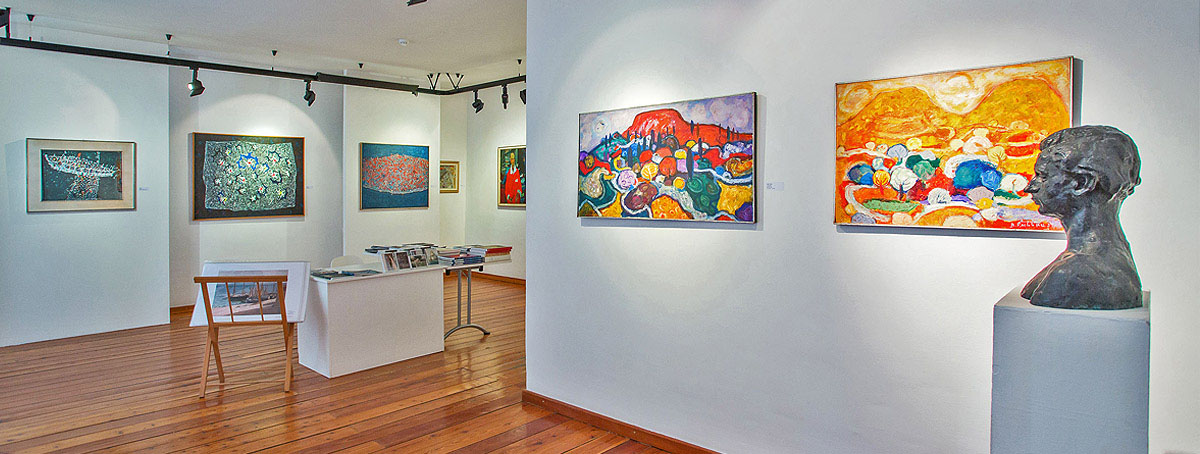
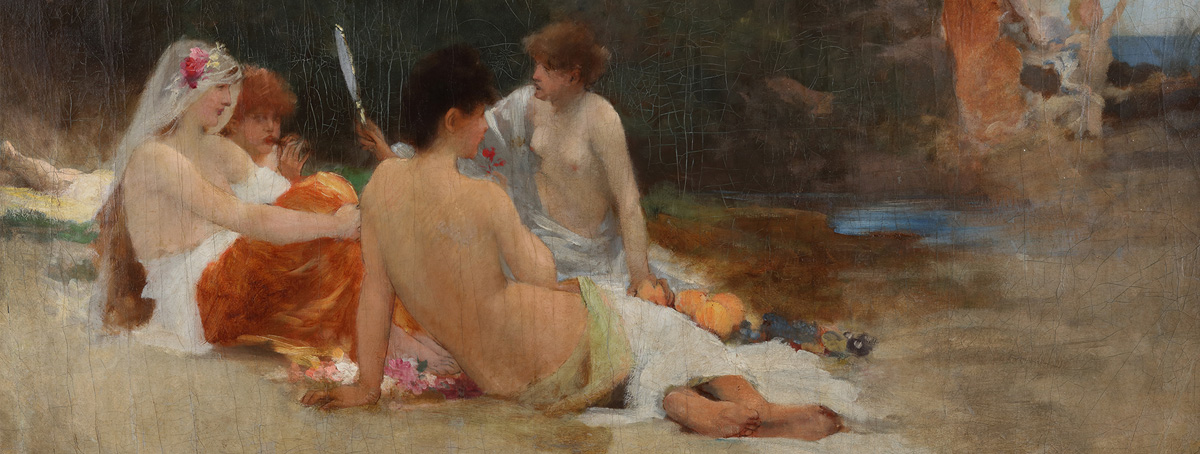

EXHIBITIONS · The Museum of Modern Art Dubrovnik
MATKO VEKIĆ
RESORT WITHOUT SIGNAL
20.8. – 18.10.2026.
Curated by: Jelena Tamindžija Donnart, Jasminka Babić (Museum of Fine Arts, Split), Dora Lučić (Museum of Modern Art Dubrovnik)
The Museum of Modern Art Dubrovnik is currently hosting an exhibition by Croatian contemporary painter Matko Vekić, titled Resort without a Signal. The exhibition is organised in collaboration with the Split Museum of Fine Arts, where it will be shown in 2027. From the very beginning of his artistic career in the late 1990s, Matko Vekić has distinguished himself as one of the most intriguing painters of his generation, articulating an authentic vision of the contemporary human condition while remaining steadfastly committed to the traditional medium of painting. Accordingly, Vekić’s thematic concerns have ranged from urban landscapes, the iconography of popular culture and mass media, and critiques of dominant symbols of power to the recording of social changes reflected in the realities of everyday life. His new series, “Resort Without Signal”, consists of works created in 2025 and 2026 dealing with Mediterranean spaces beyond the reach of the network, that is, beyond signal. This new body of work, however, cannot be fully understood without the series that preceded it, which will also be featured in the Dubrovnik exhibition. The series Archipelago, Tree in the Island, Alluvium, Existence in the Island, and Serenity, produced between 2020 and 2025, constitute a kind of ode to nature, to an environment the artist has examined with microscopic precision, viewed through the study of formal artistic elements and the exhaustive exploration of the possibilities inherent in the medium of painting itself. In the new series, Vekić presents a transitional narrative of unfinished, artificial and plastic structures that remain caught in an in-between space and an in-between time, sending no signal to the outside world. The devastation of an ecosystem is borne witness to by abandoned fences, half-finished walls, empty swimming pools, and accumulated rubbish, together composing a contemporary patina of time. These sites are entirely detached from the natural environments in which they have been created, provoking in the artist a genuine sense of human distress in response to such a lack of understanding and sensitivity towards the distinctive qualities and values of the spaces we inhabit. The exhibition is curated by Jelena Tamindžija Donnart and Jasminka Babić (Museum of Fine Arts, Split), with Dora Lučić as the curator for the Museum of Modern Art Dubrovnik. The exhibition is on view until 18 October 2026.
Biography:
Matko Vekić was born in Zagreb in 1970, where he earned a degree in painting from the Academy of Fine Arts in 1995. He has exhibited widely in Croatia and abroad (Germany, Austria, Egypt, England, France, Turkey, Italy, Luxembourg). He represented Croatia at the Cairo Biennale on two occasions, in 2006 and 2010, and at the Venice Biennale in 2009. His study visits have taken him to Japan, Turkey, and India (twice). He has received numerous awards for his work, and his pieces feature in the holdings of many museums and galleries, as well as in a range of other public and private collections in Croatia and abroad. He has held a position as full professor at the Academy of Fine Arts in Zagreb since 2017
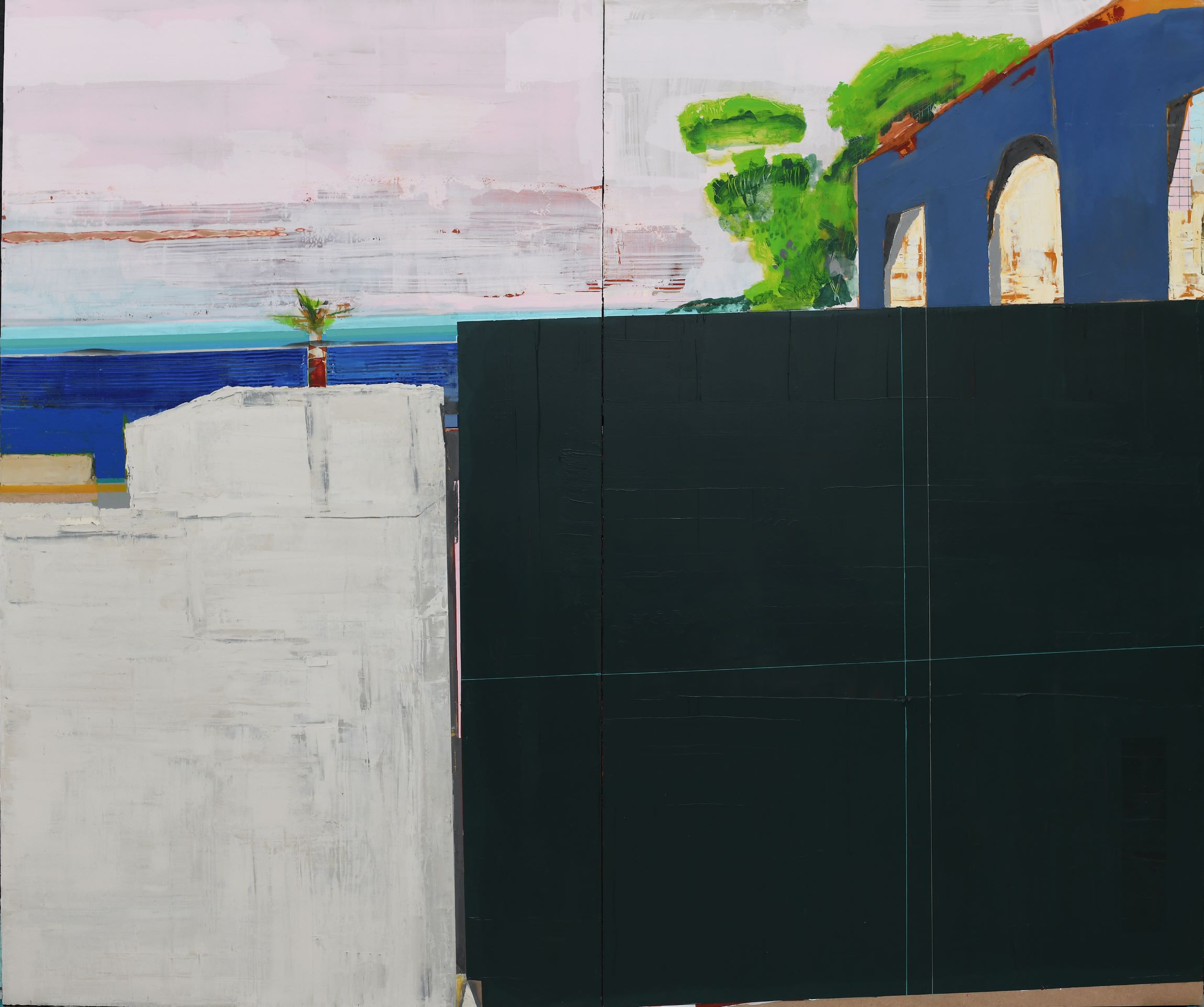
Resort Without Signal I, 2026.
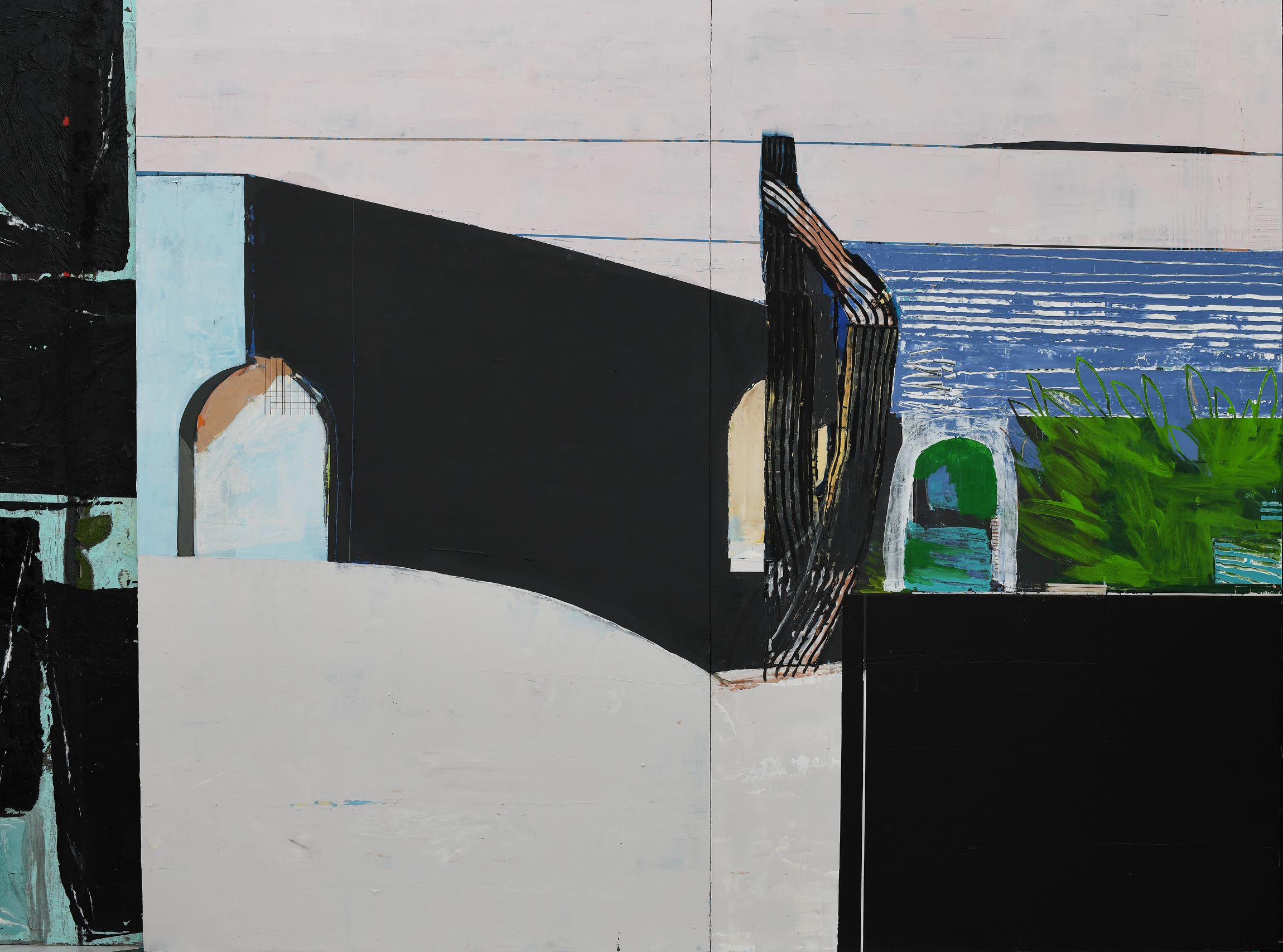
Refuge II, 2026.
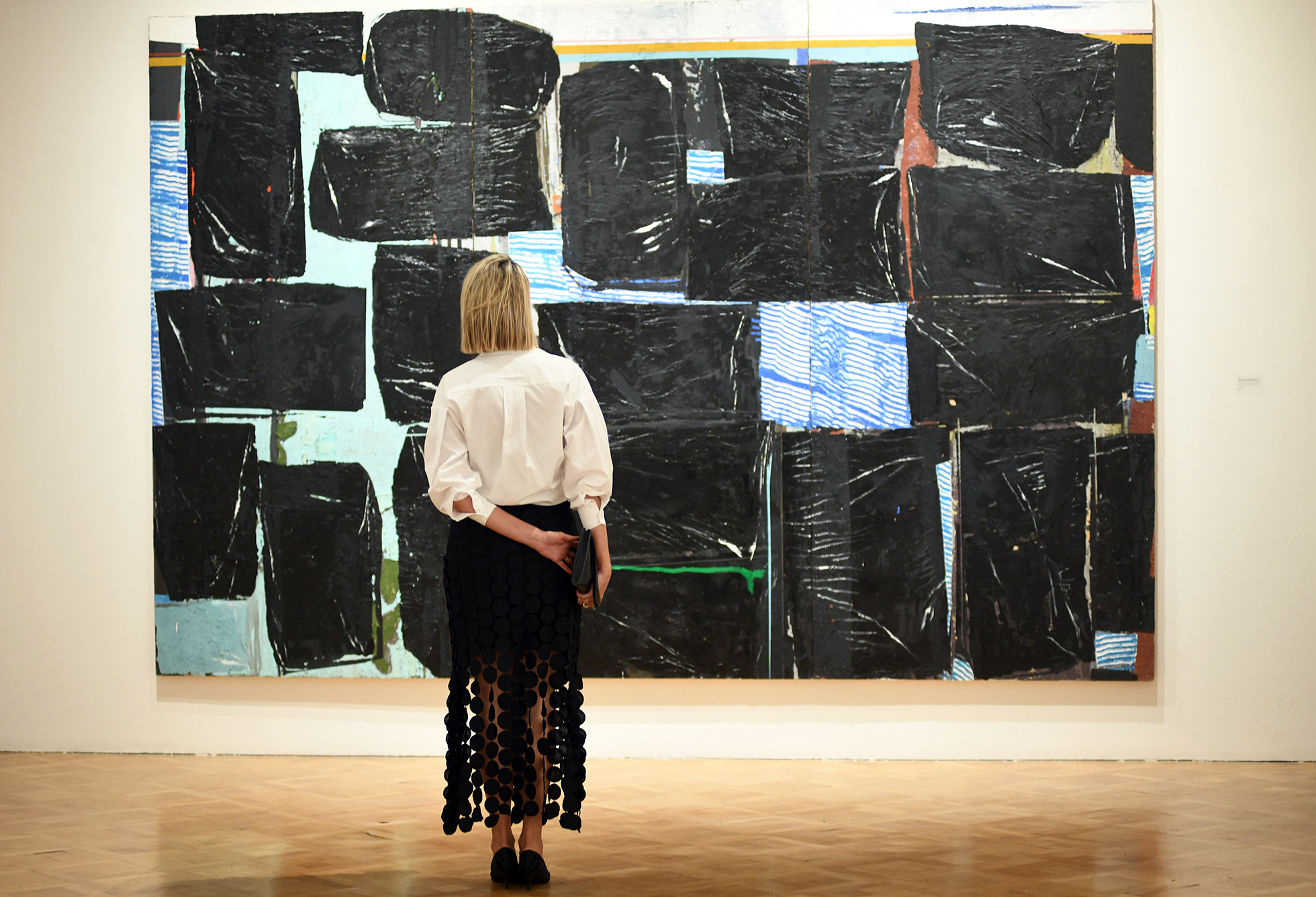
Postav izložbe
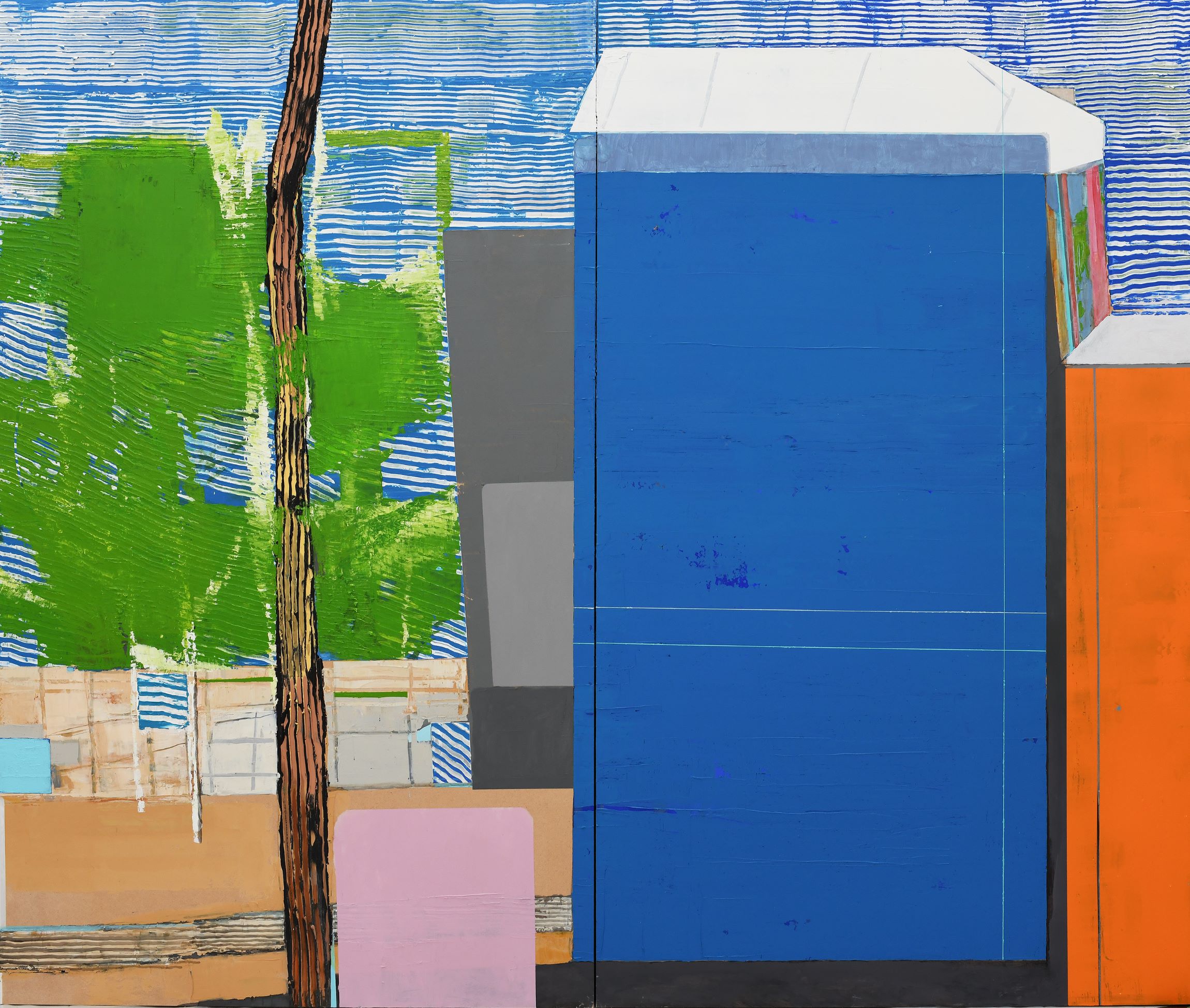
Resort under Construction,2026.
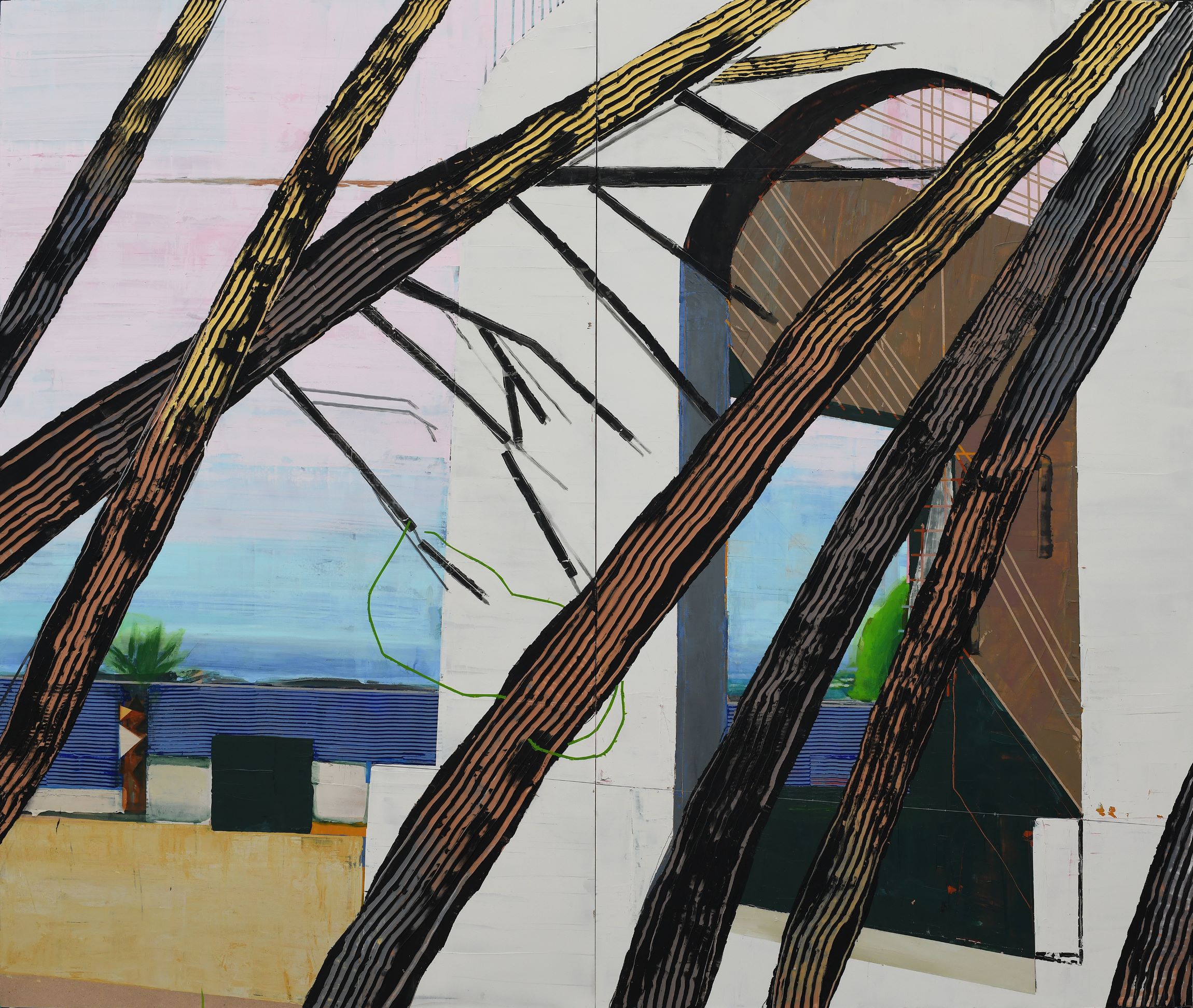
Backdrop, 2026.
-------
NIVES SERTIĆ
LANDSCAPES:IMMERSION
18.6. – 16.8. 2026.
Curated by: Rozana Vojvoda
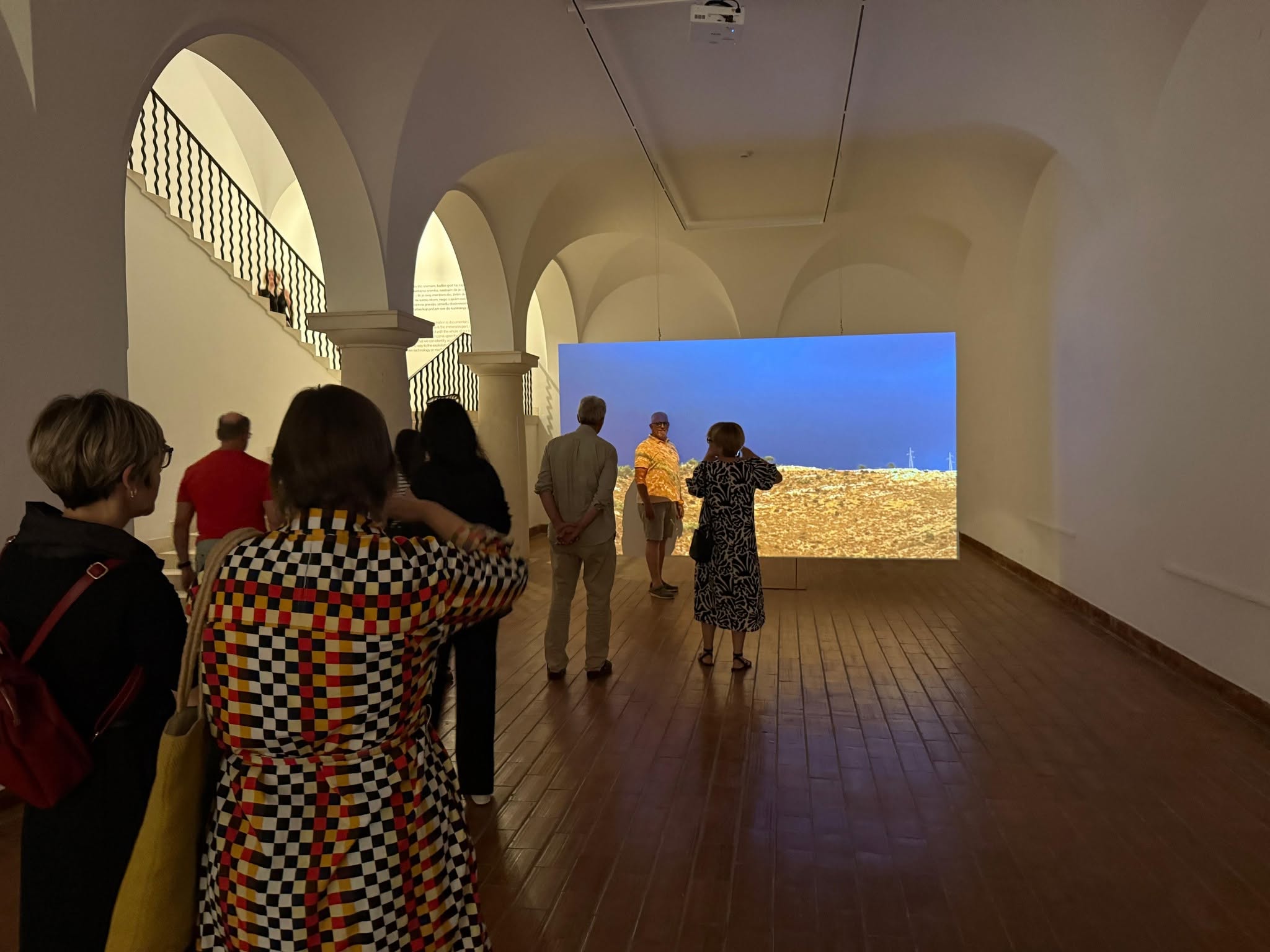
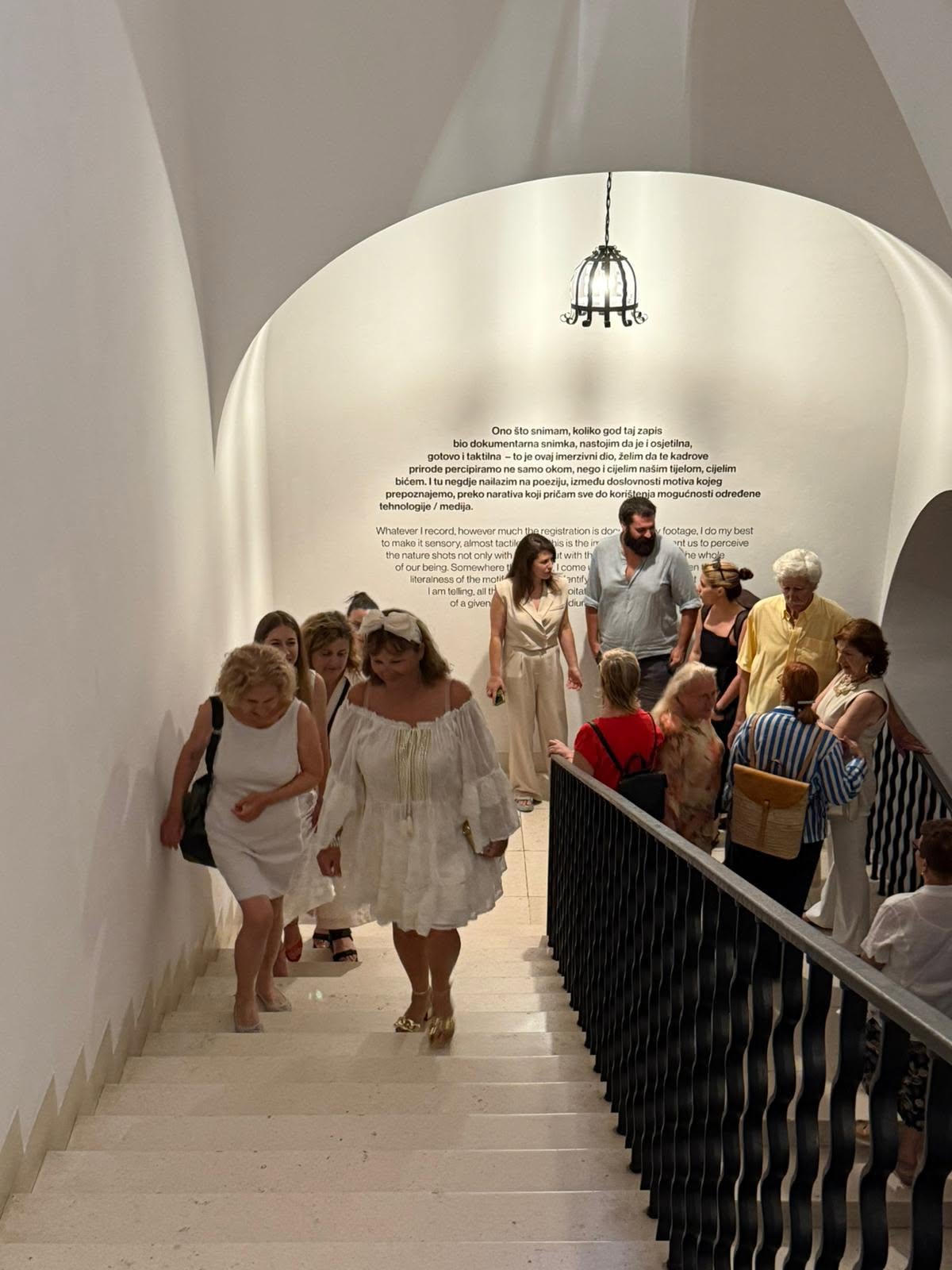
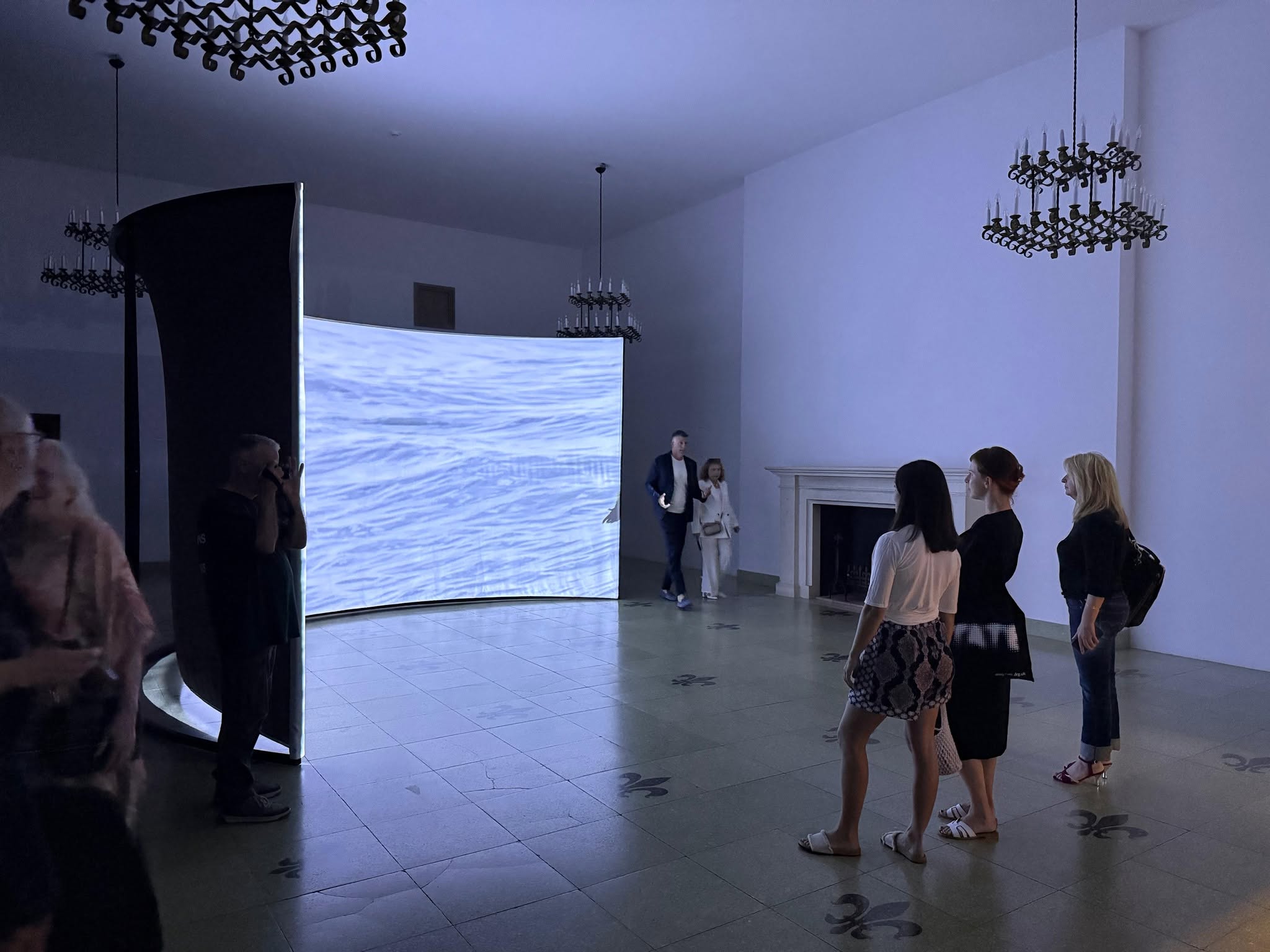
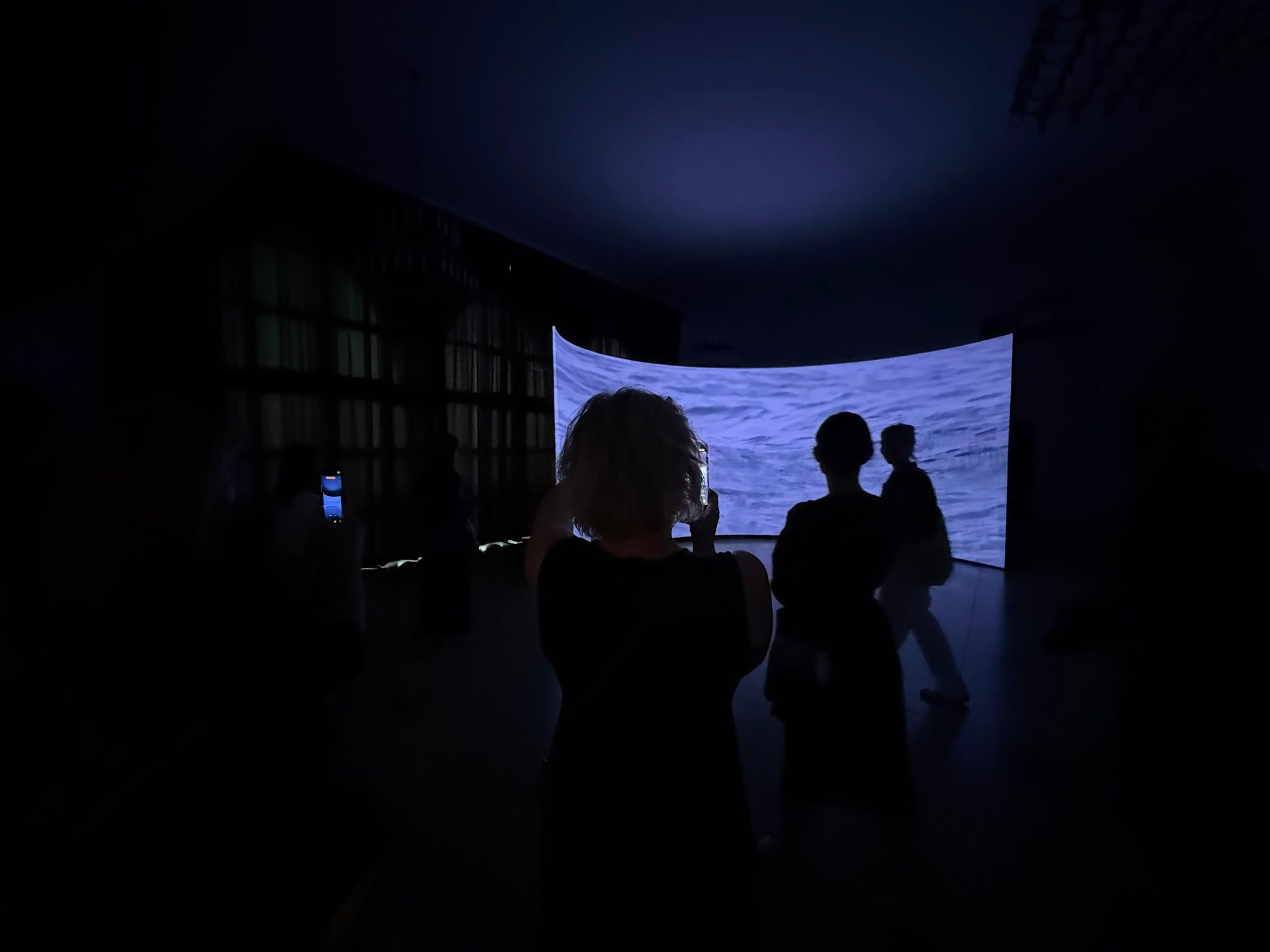
In her first one-woman presentation in the Museum of Modern Art Dubrovnik entitled Landscapes: Immersion the artist shows her works which problematise the landscapes related to Dubrovnik as well as its wider environs, from the originating works (3 to 10, Trees, 2020, An hour of time, 2021, Observers, 2022) to more recent spatial installations (Bez naziva (more) / Untitled (Sea), 2023/2026; At the Source, Ombla, 2024/2026…)
In the context of the exhibition, the works shown on the first floor of the gallery function both as points of reference for the Dubrovnik landscape and as initiation into the scenes that await us on the second floor. The degree of the fragmentation and induced unfamiliarity of the landscape grows in proportion to the dimensions of the scene; a fine dynamics develops between the invitation to immerse oneself in the scene and the incentives to the exploration of the unusual spatial relationships that the artist offers us in the set-up of the work.
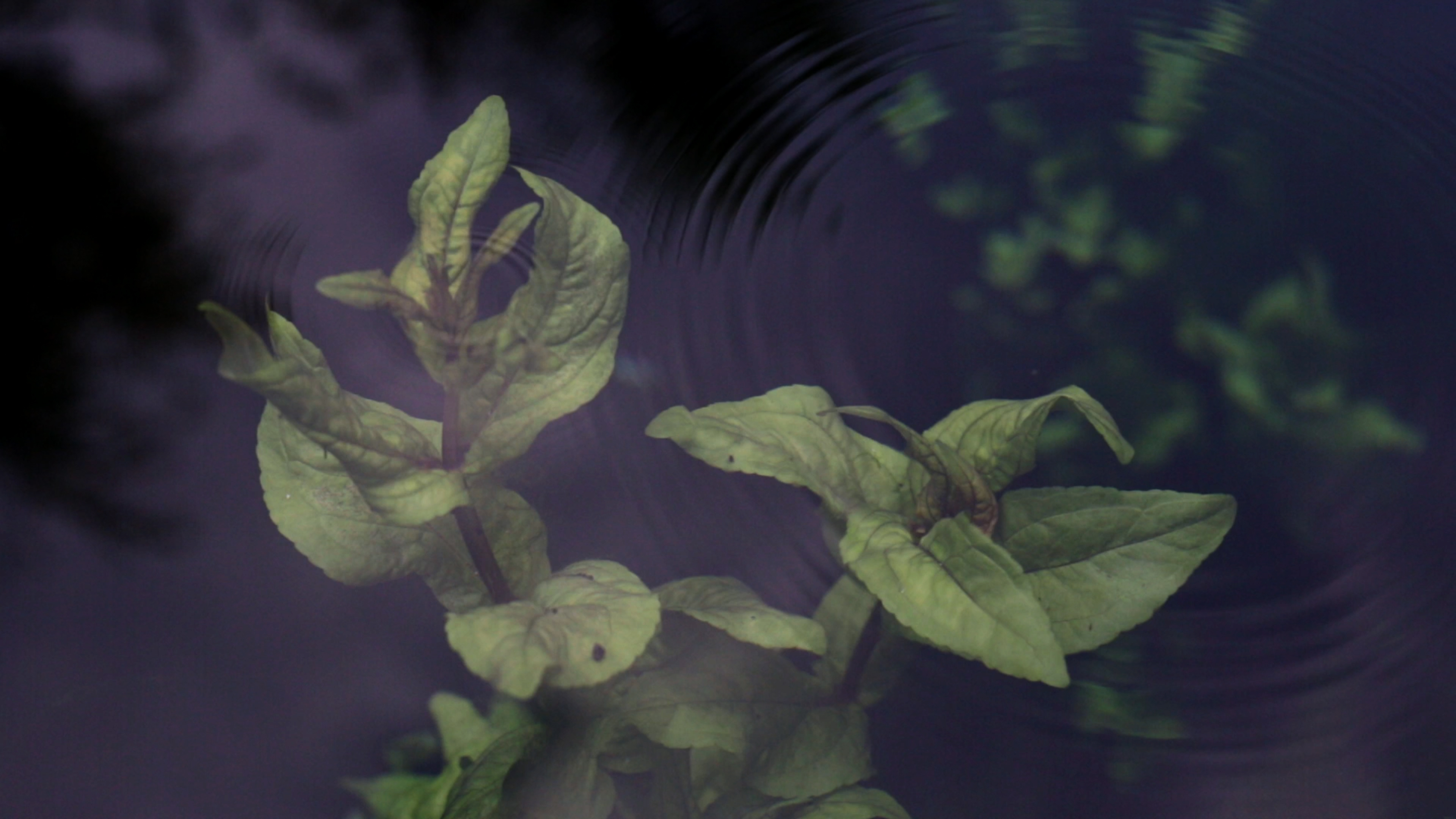
From An Hour of Time and the selected sequence of changes in nature with which we start the journey through these multimedia landscapes, in the second floor of the venue we are completely steeped in its newly unfamiliar manifestations, from the depiction of the hypnotic rolling of the sea to the aquatic plants in their to and fro swaying up to the meditatively constructed landscape. As one moves through the show, ultimately, we discover that the real body of her work does not consist only of landscape footage but inheres in the act of turning the attention to the endless multifariousness of observation, to addressing our ability “to look with focused attention” and most of all in the time spent in observation, now inscribed into the scene.
Biography:
The multimedia artist Nives Sertić was born in Dubrovnik in 1984. She took her degree from the Animated Film and New Media Department of the Academy of Fine Arts in Zagreb. Her work features multiyear interdisciplinary projects, poetic installations and performances. She explores the boundaries and overlaps of the different media, with a pronounced focus on photography and film. In her recent works she interrogates the individual’s perception and attitude to the environment. She uses observation as an act of contemplation in her artistic work. Her multimedia artistic practice is also realised through applied and collaborative projects. In addition, she engages with graphic design, set design, visual set-ups, curation and exhibition organisation. She has taught at the School of Design at the University of Zagreb and at the Public Open University Zagreb. She is a member of several professional associations (HZSU, HDLU, HDLUDU ) as well as of Lazareti Art Workshop and Split Cinema Club. She has exhibited her work at a number of collective and individual exhibitions at home and abroad.
----
REBOOT – DORINDA BULIĆ ČOTIĆ
19 March 2026 – 10 May 2026
The exhibition ‘Reboot’ of a contemporary multimedia artist Dorinda Bulić Čotić opened on Thursday, 19 March at the Museum of Modern Art Dubrovnik.
In the exhibition Reboot, Dorinda Bulić Čotić re-examines total restart and reset in the zone of art. This multimedia artist engages with her own work, opening discourses related to life and aesthetics. Concerned here is a work that critically takes up the issues of art per se, laying conceptual territory open as it does. The exhibition considers the subtlety and depth of colour, enters areas in which lightness emerges from heaviness in its unceasing existence. She explores a multilevel emptiness of the superfluous for the reset to be able to take place. She goes into the temporal gap upon which change is dependent. She deals with the process between as interim state. Here we have a description of state of the individual and of the world. Consciousness and reality are layered; so concludes the artist, and shows it in her works.
The artist explores the space between, changes from one form and one activity to another and transitional state of awareness. A transformation takes place, total freedom in which truth is patent. It can be seen and tracked in the works with all its intensity.
Turning to the authentic self is the beginning of the road.
We have to have extensive awareness and insight, says the artist. The cultural, economic social and religious backgrounds are different, but the mind needs to be totally vacated to know itself. Simply, without an understanding of the self there is no truthful thought. Self-knowledge is the condition for thinking that only then is truthful.
All this, Dorinda Bulić Čotić expresses in the symbolically entitled exhibition Reboot.
The exhibition is conceived and curated by Petra Golušić, Museum Advisor at the Museum of Modern Art Dubrovnik. The exhibition will remain on view until 10 May 2026.
BIOGRAPHY
Dorinda Bulić Čotić was born in Dubrovnik but did her secondary education at the School of Fine Arts in Split and took a degree from the Academy of Fine Arts in Sarajevo. She has been active in the realms of painting and graphic design, has taught, and worked for UNICEF in the field of psychology and education. Recently she has been absorbed in her analysis of social and spiritual paradoxes. Artist interrogates her own emotional shifts and turmoils, with an emphasis on changes to the familiar paradigms. This artist reflects on the dehumanisation of reality, the downgrading of quality and the problematics of aesthetics. She underlines ideological restrictions, the fallacies of contemporary culture, the issue of primordial freedom and truth. She expresses herself in mixed media, installations, photography, video and digital glitch art.
She has exhibited in numerous solo exhibitions in Croatia and abroad. Recent solo exhibitions include MOMAD, Dubrovnik: Reboot; Loggia Gallery, Split: Drift; Žitnjak Gallery, Zagreb: 404 Not Found; Art Workshop Lazareti, Dubrovnik: About: blank; and Flora Gallery, Dubrovnik: Disrupted Paradigms. The artist has also presented her work in recent group exhibitions, including Lauba, Zagreb: NESVRSTANI 8; Art Workshop Lazareti, Dubrovnik: 35 Years of AWL; Red Cross Building / the former Sutjeska Cinema, Sarajevo: ART RAT i.e. ART WAR; Kazamat Gallery / Gallery Kat, Osijek: Before Us; and Gallery MaMa, Zagreb: Fubar Glitch Festival, among other events. She is currently the president of the Croatian Association of Visual Artists Dubrovnik (since 2014. She is a member of the Croatian Association of Visual Artists Dubrovnik, the Croatian Association of Visual Artists, and Art Workshop Lazareti. She lives and works in Dubrovnik.
.jpg)
.JPG)
.jpg)
THE KVIZ COLLECTION – A LITTLE TREASURY OF CROATIAN PAINTING
12 March 2026 – 17 May 2026
Concept by: Petra Vugrinec and Danijela Markotić
Curated by: Rozana Vojvoda, Museum of Modern Art Dubrovnik
Photographer: Goran Vranić
The exhibition “The Kviz Collection – A Little Treasury of Croatian Painting”, organised by the Museum of Modern Art Dubrovnik in collaboration with the Klovićevi Dvori Gallery, opened on Thursday, 12 March at the Museum of Modern Art Dubrovnik.
The exhibition “The Kviz Collection – A Little Treasury of Croatian Painting” brings together 68 exceptional works of art from the collection of Boris and Jelva Kviz, which has become part of the holdings of the Klovićevi Dvori Gallery thanks to their generous donation. The collection traces a stylistic continuum in Croatian painting, beginning with works associated with Realism, Symbolism and plein-air painting (Bukovac, Medović, Crnčić, Kovačević, Vidović, Rački), continuing with the Munich Four (Kraljević, Becić, Račić, Herman), and extending to the stylistic pluralism of the interwar period, including Expressionist examples connected with the Spring Salon and artists of the Prague Group (Uzelac, Gecan, Trepše). It also includes works marked by a Euclidean approach to form and Magical Realism, as well as a distinctive group of Mediterranean-themed paintings characterised by intense chromaticism and sensual morphology (Job, Plančić, Babić, Uzelac). The collection comprises works by Becić, Miše and Uzelac from the 1920s, and continues through to the post-war period up to the 1960s, including the intimate style of Vidović and Šulentić, alongside a substantial segment of Miljenko Stančić’s fantastic painting.
Bukovac’s The Five Senses (1898) and Račić’s Self-Portrait (1906) are individually listed as protected cultural heritage assets, and all the works are well documented in the relevant academic literature on the period and the artists, with their provenance traceable to the time of their execution.
The exhibition is conceived and curated by Petra Vugrinec, Museum Advisor at the Klovićevi Dvori Gallery, and Danijela Markotić, Senior Curator at the same institution, with Rozana Vojvoda, Museum Advisor at the Museum of Modern Art Dubrovnik, as the curator for the host institution.
The exhibition will remain on view at the Museum of Modern Art Dubrovnik until 17 May 2026.
Biographies:
Boris Kviz
Born in Zagreb on 19 September 1931 to Emanuel and Otilija (née Ceraj), he completed his secondary education in the city in 1950, graduated in 1957 from the Faculty of Electrical Engineering (now the Faculty of Electrical Engineering and Computing), and earned his doctorate in 1964 with a thesis titled The Influence of Variable Parameters on the Degradation of the Signal-to-Noise Ratio in Frequency Modulation of Stereophonically Compatible Systems. He pursued specialist training in the Federal Republic of Germany and the United Kingdom, worked at Radioindustrija Zagreb, and from 1959 was employed as an assistant at the Department of High-Frequency Engineering of the Faculty of Electrical Engineering (today the Department of Radio Communications). He became assistant professor in 1969, associate professor in 1972, and full professor in 1977, remaining in that post until his retirement in 2001. His professional focus included high-frequency and microwave electronics and communications (including radiotelemetry, radiolocation, radio navigation, optical communications and optoelectronics) and he contributed to the planning of television networks in Croatia, Slovenia and Bosnia and Herzegovina, the design of the RTV building in Zagreb, and numerous other projects within his field. He continues to live in Zagreb.
Jelva Kviz
Born into the Goić family in Supetar on the island of Brač on 29 February 1936, she completed her secondary education in Split. She went on to study French language and literature and Italian language and literature at the Faculty of Humanities and Social Sciences, University of Zagreb. She initially worked as a translator and later pursued additional training at the Faculty of Economics in Zagreb in order to specialise in foreign trade. She subsequently worked in the representative offices of the international companies Pirelli and Iveco. She lives in Zagreb.
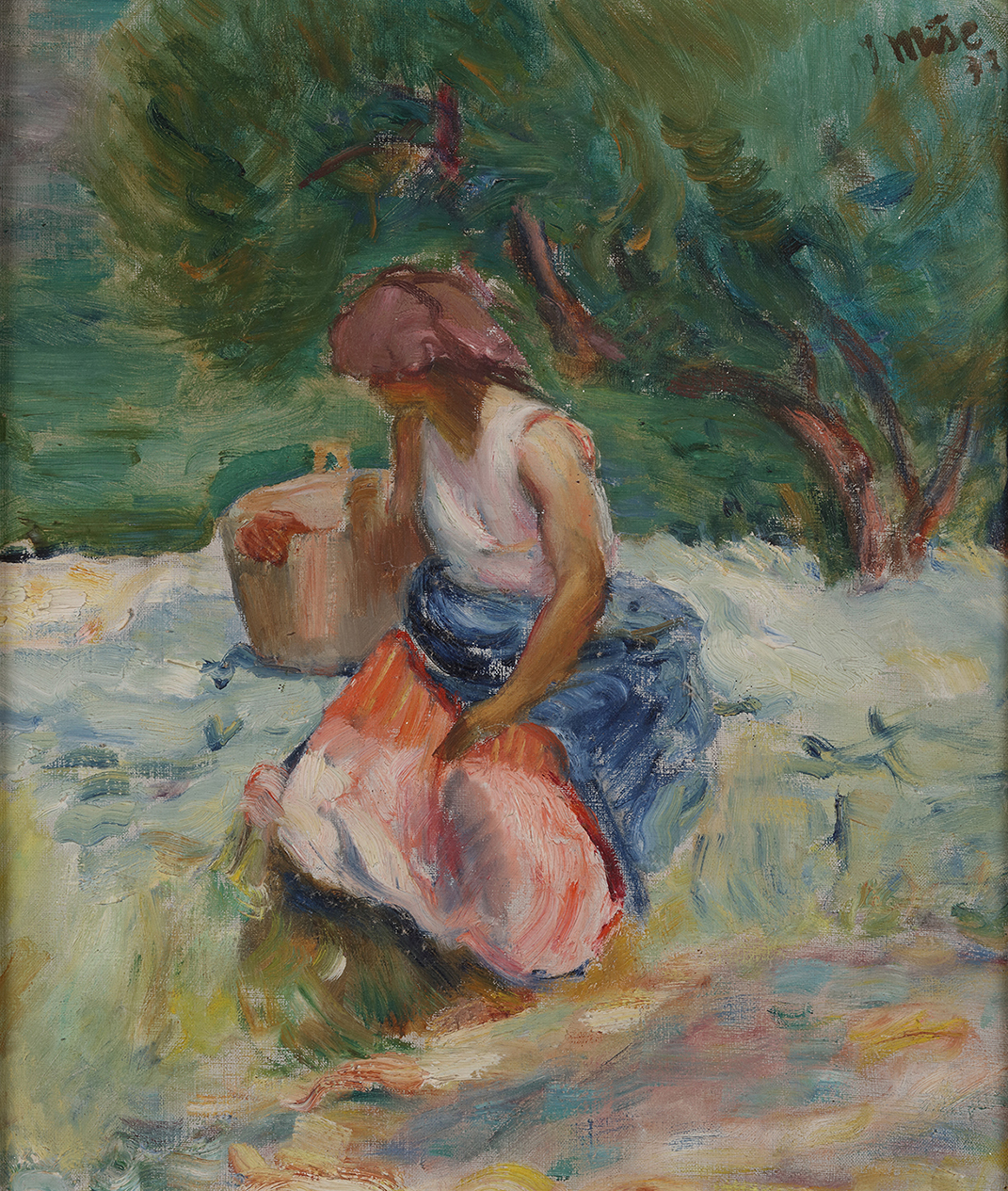
Jerolim_Miše_Pod_maslinom_1937
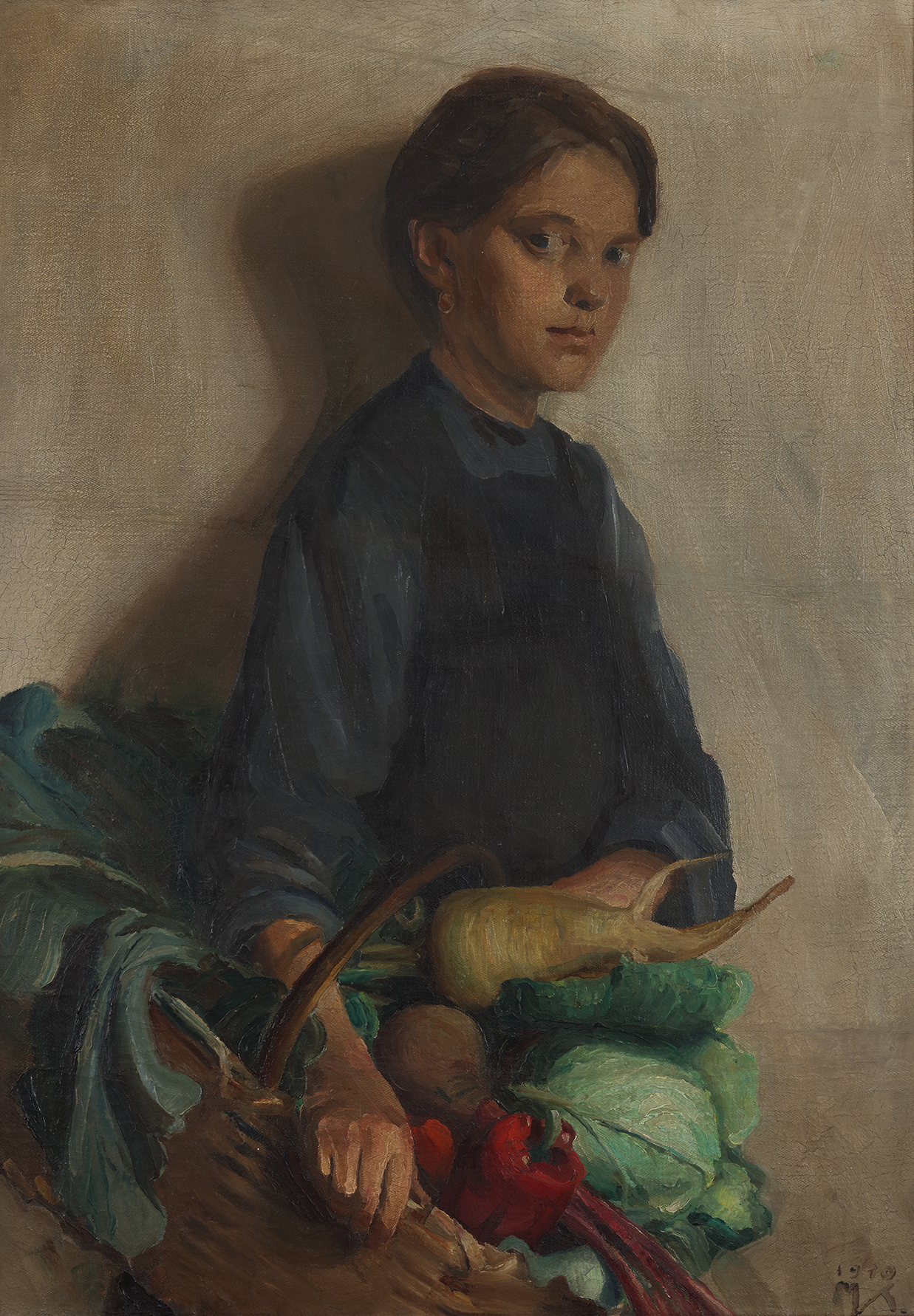
Miroslav_Kraljević_Djevojka_s_povrćem_1910
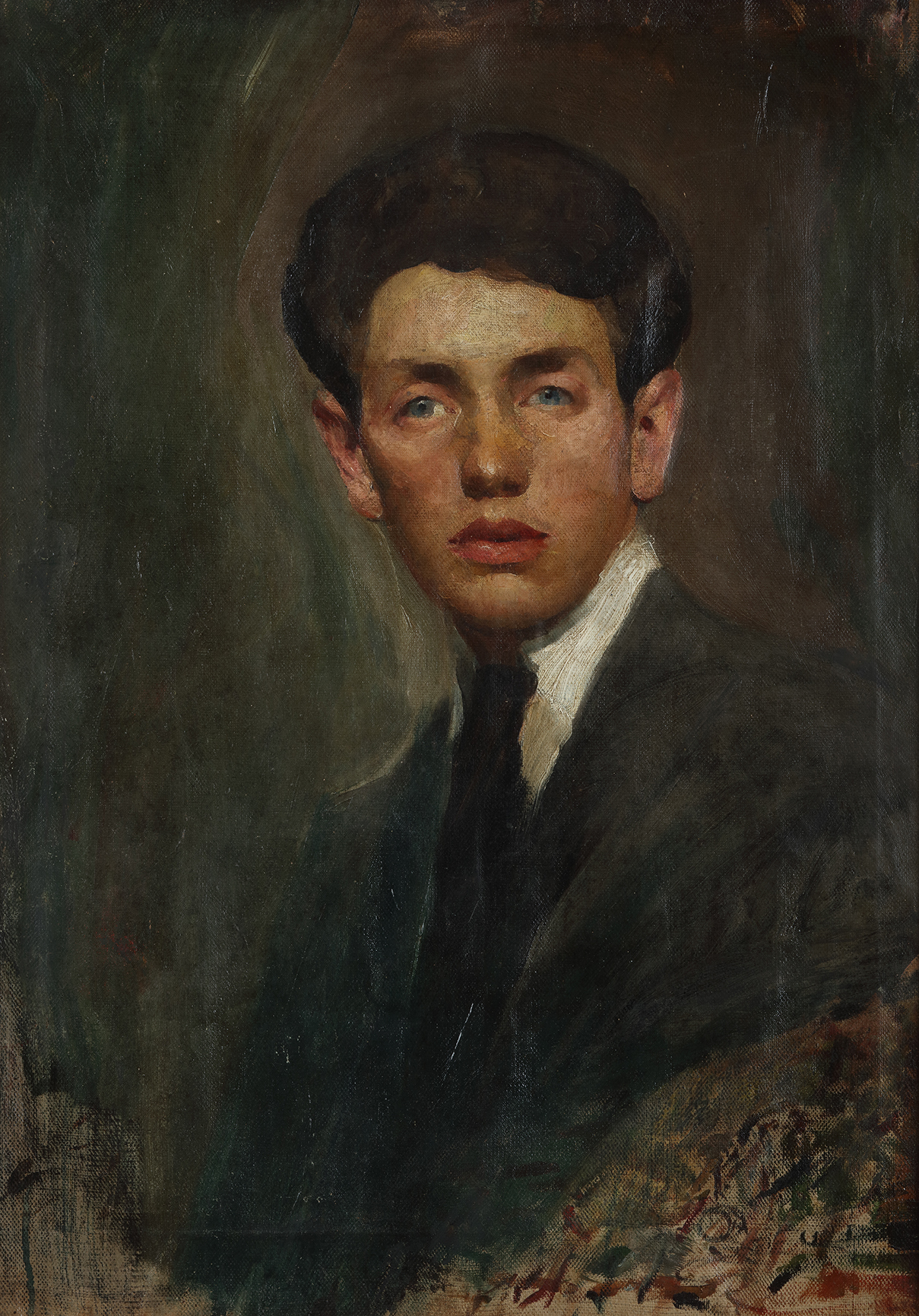
20_Josip_Račić_Autoportret_1906.-07.jpg
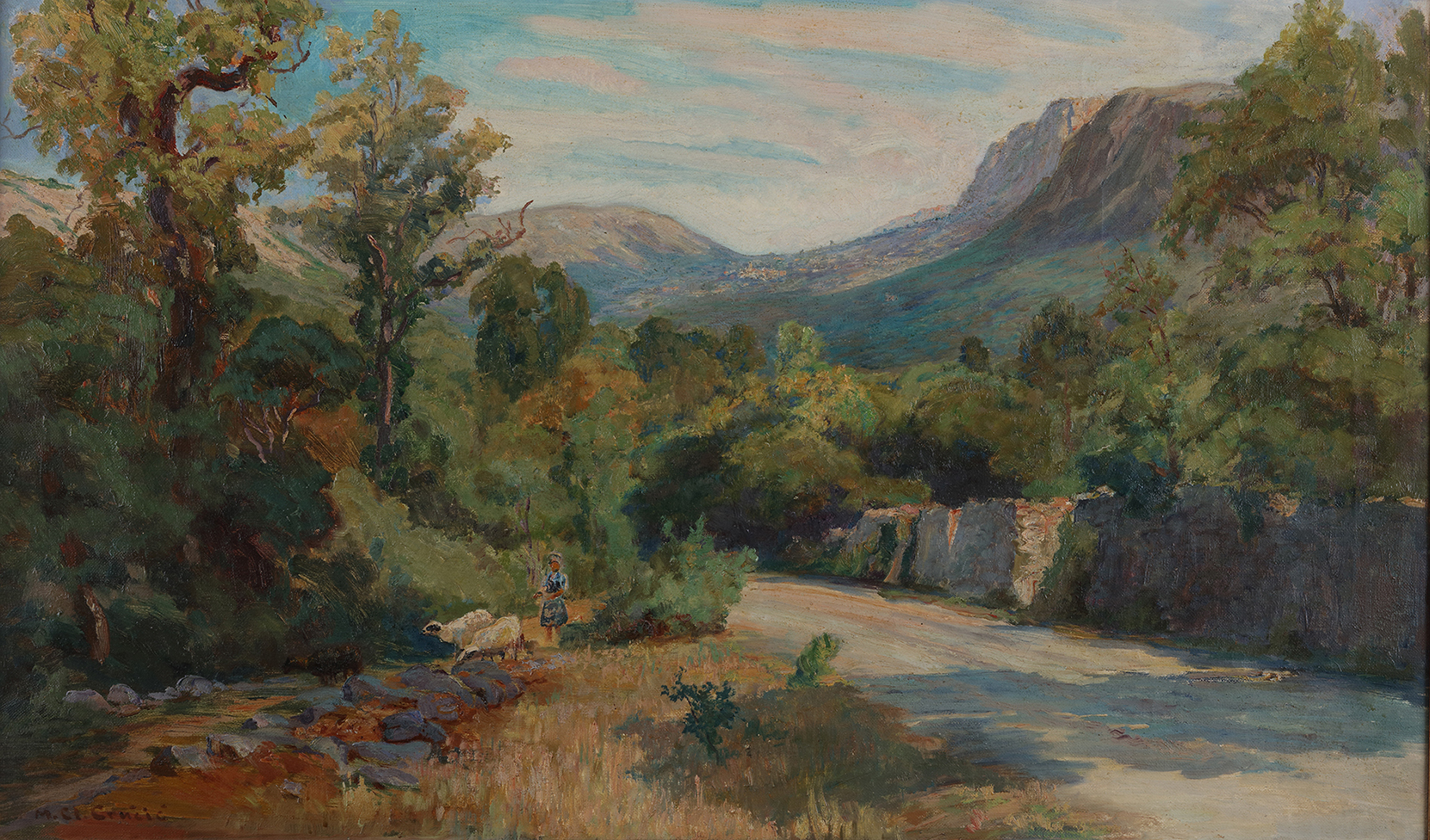
Menci_Clement_Crnčić_Motiv_iz_Vinodola_1915
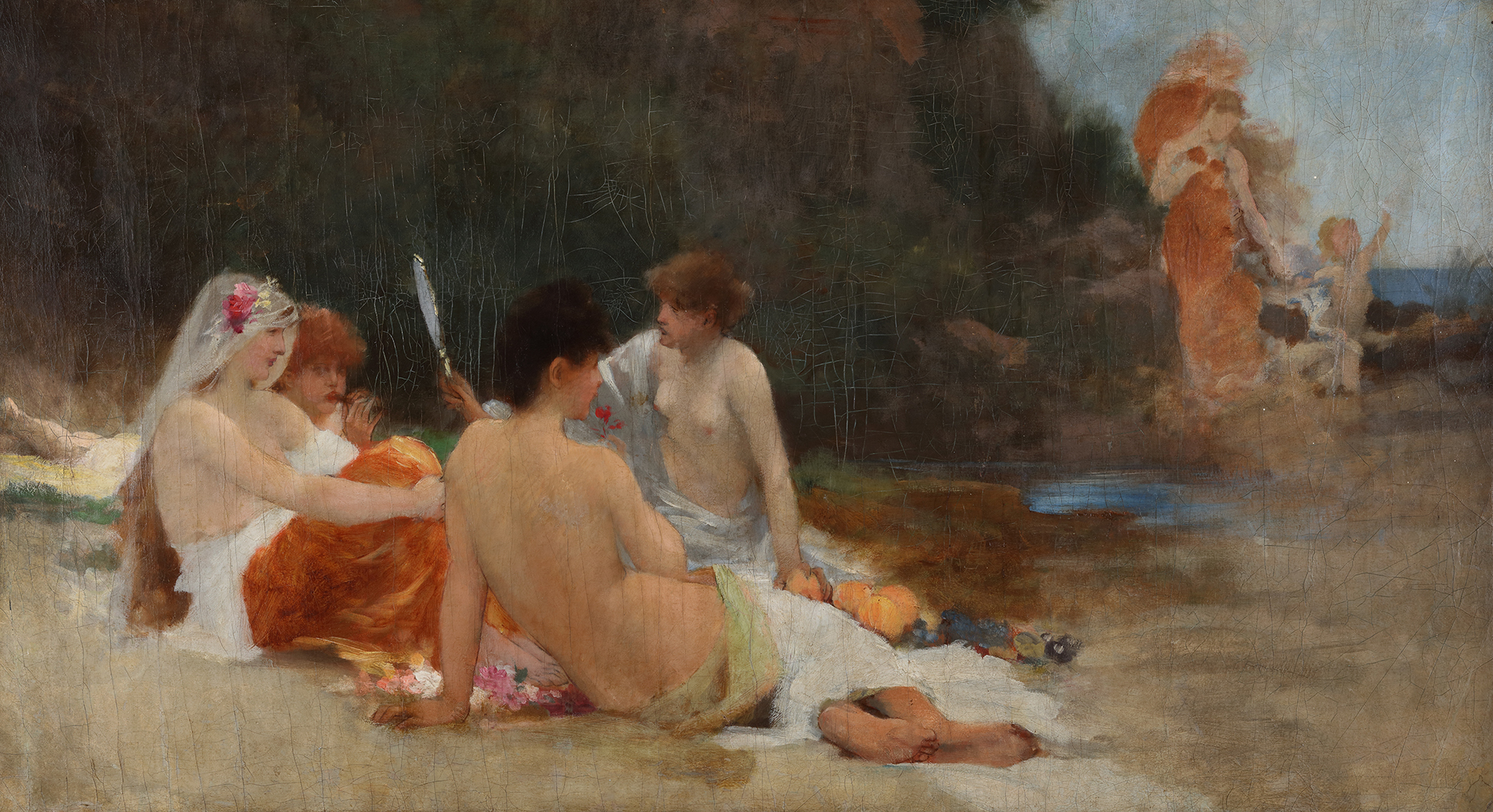
Vlaho_Bukovac_Pet_ćutila_II_1897
JOSIP ŠKERLJ
JOSIP ŠKERLJ’S PAINTING – BLACK AND WHITE IN COLOUR
Concept by: Antun Karaman, PhD
Curated by: Ivona Šimunović, Educator and Curator, Museum of Modern Art Dubrovnik
16 December 2025 – 1 March 2026
The retrospective exhibition of academic painter Josip Škerlj, titled ‘Josip Škerlj’s Painting – Black and White in Colour’, marks the final show of the anniversary year in which the Museum of Modern Art Dubrovnik celebrated a remarkable 80 years of activity.
Bringing together almost two hundred works from both private collections and the Museum of Modern Art Dubrovnik, the retrospective exhibition of Josip Škerlj aims, through critical analysis and valorisation, to underscore the significance of the oeuvre of one of Dubrovnik’s most distinguished and still active artists. By selecting works from all stages of Škerlj’s sixty-year career, the exhibition foregrounds not only his enduring artistic vitality but also a pivotal chapter in Dubrovnik’s painting heritage.
Presented in chronological order, the exhibition traces Škerlj’s work from the 1960s to the present day, highlighting the breadth of his artistic production and its thematic diversity, with a particular focus on his artistic foundations, personal perspective, and the recurring motif of Dubrovnik.
BIOGRAPHY:
Academic painter Josip Škerlj was born in Dubrovnik in 1941, where he completed his primary and secondary education. He received his first formal artistic training within the circle of artists around Kosta Strajnić, a committed mentor who guided many young Dubrovnik painters. After completing his studies at the Academy of Fine Arts in Zagreb, Škerlj returned to Dubrovnik, taking up a position as a primary school art teacher while continuing to paint privately until his retirement in 2006. He held his first solo exhibition in Split in 1968 at the Matica hrvatska Salon, and went on to exhibit extensively in Croatia and abroad. In addition to painting, Škerlj has pursued writing (both poetry and prose) as well as stage design. He published several collections of poems and short stories for adults and children. Throughout his career, he has received numerous accolades, including the Order of Danica Hrvatska with the likeness of Marko Marulić, the City of Dubrovnik Award for Visual Arts, and the Dubrovnik-Neretva County Award. He continues to live and work in Dubrovnik.
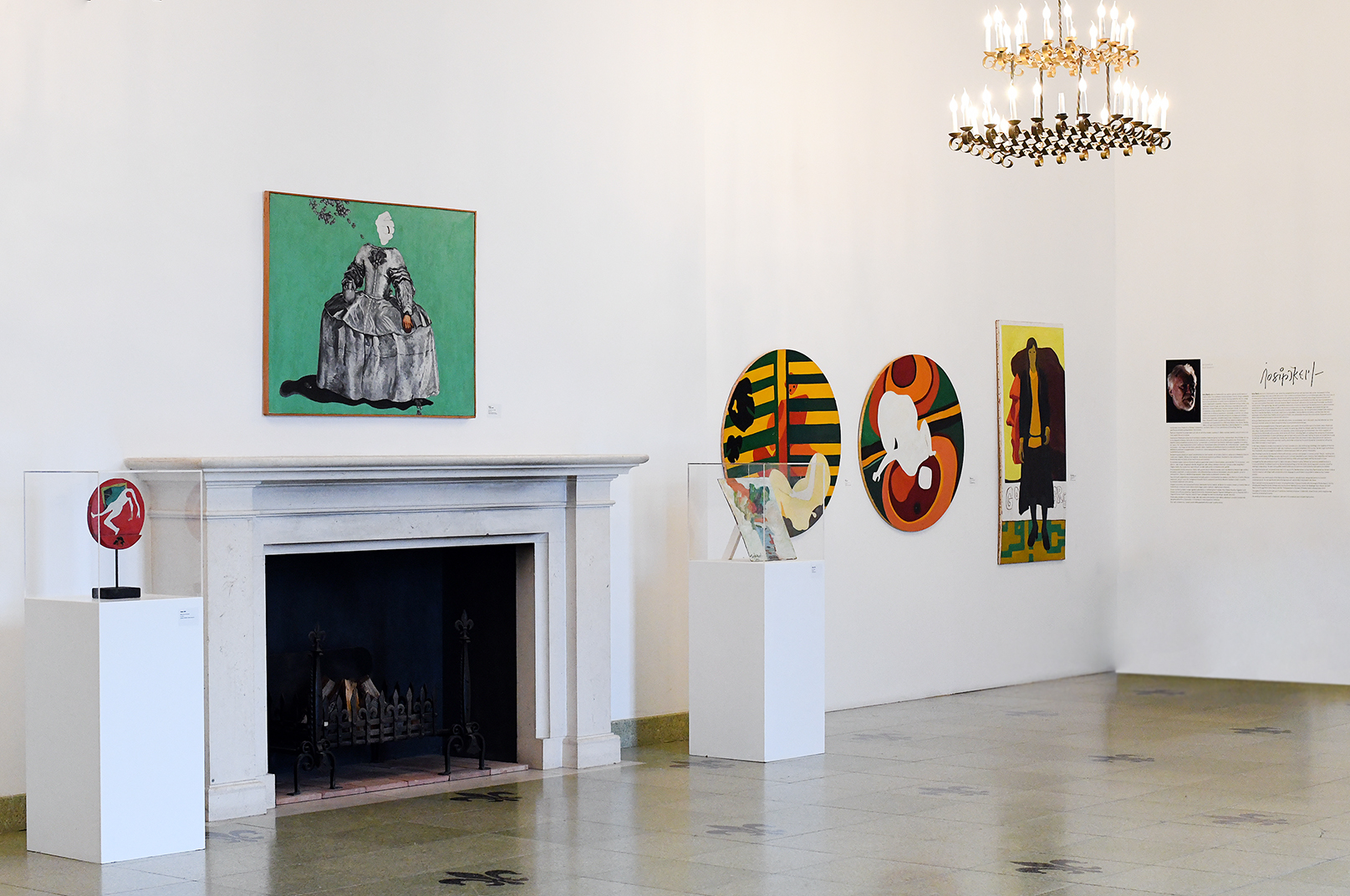
Dio postava Škerlj
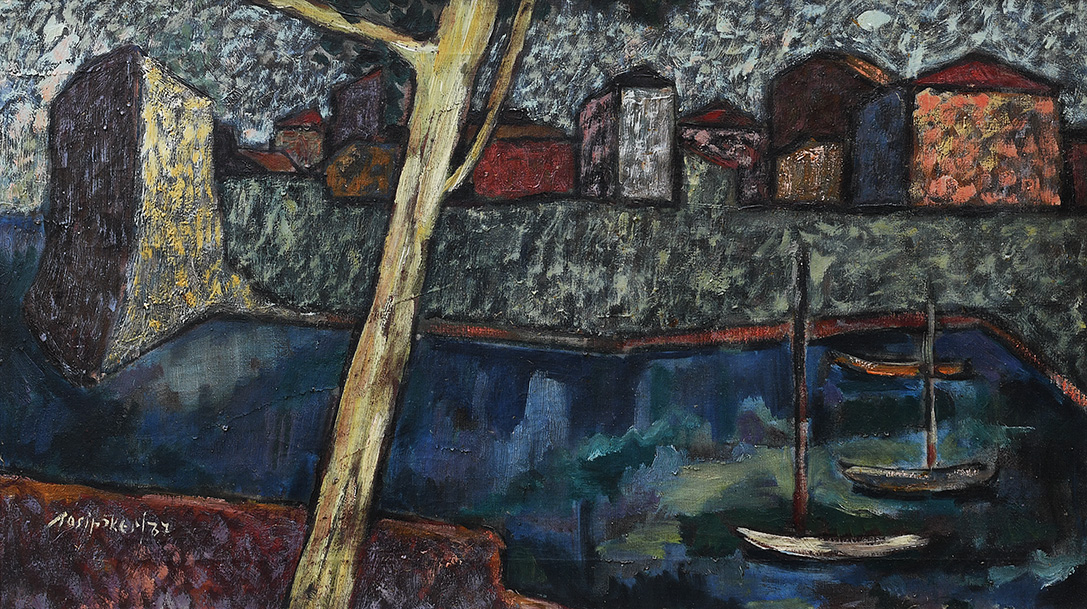
Gradska Luka, 1967, ulje na platnu,50 x 90 cm
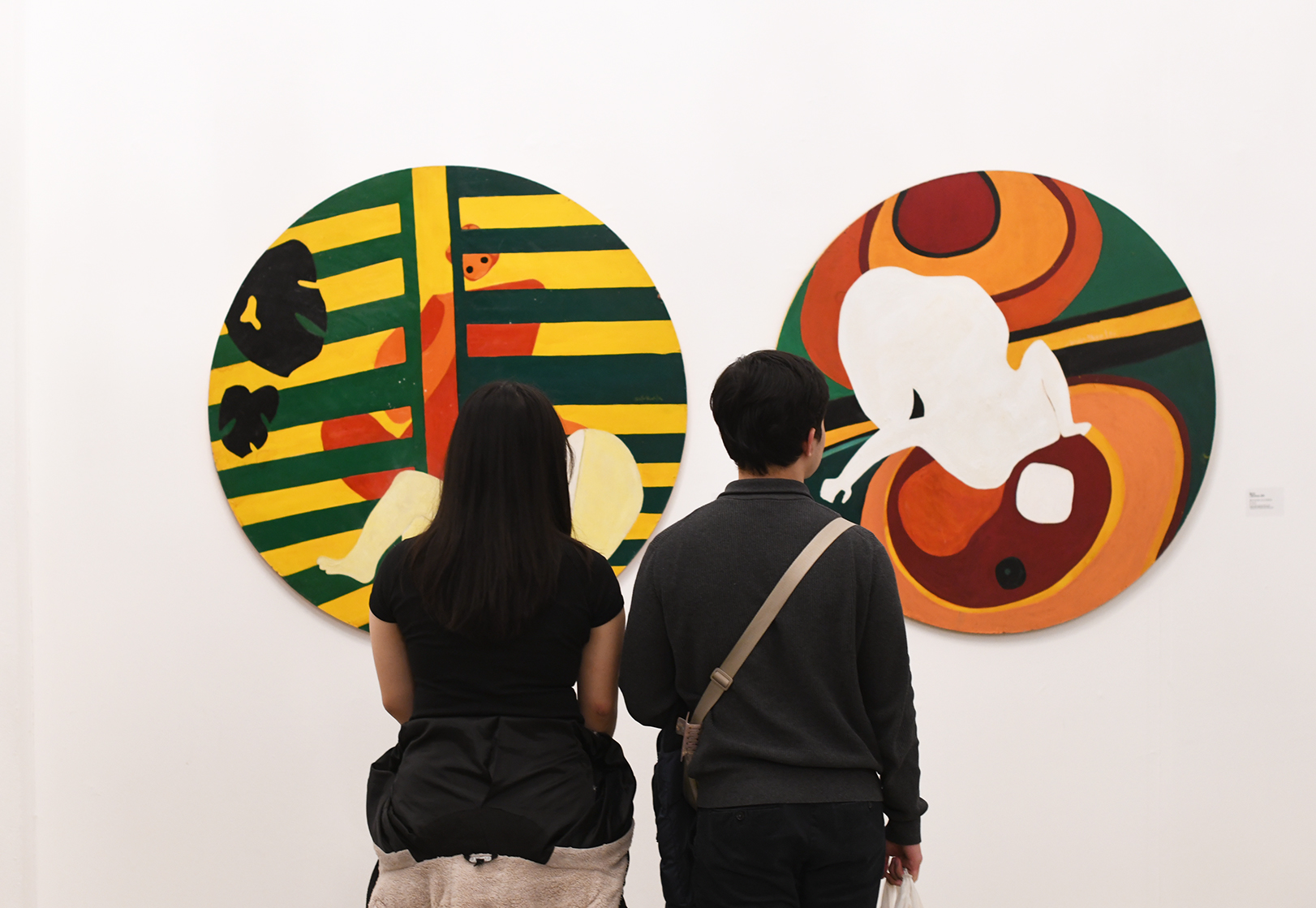
Izložba Josip Škerlj
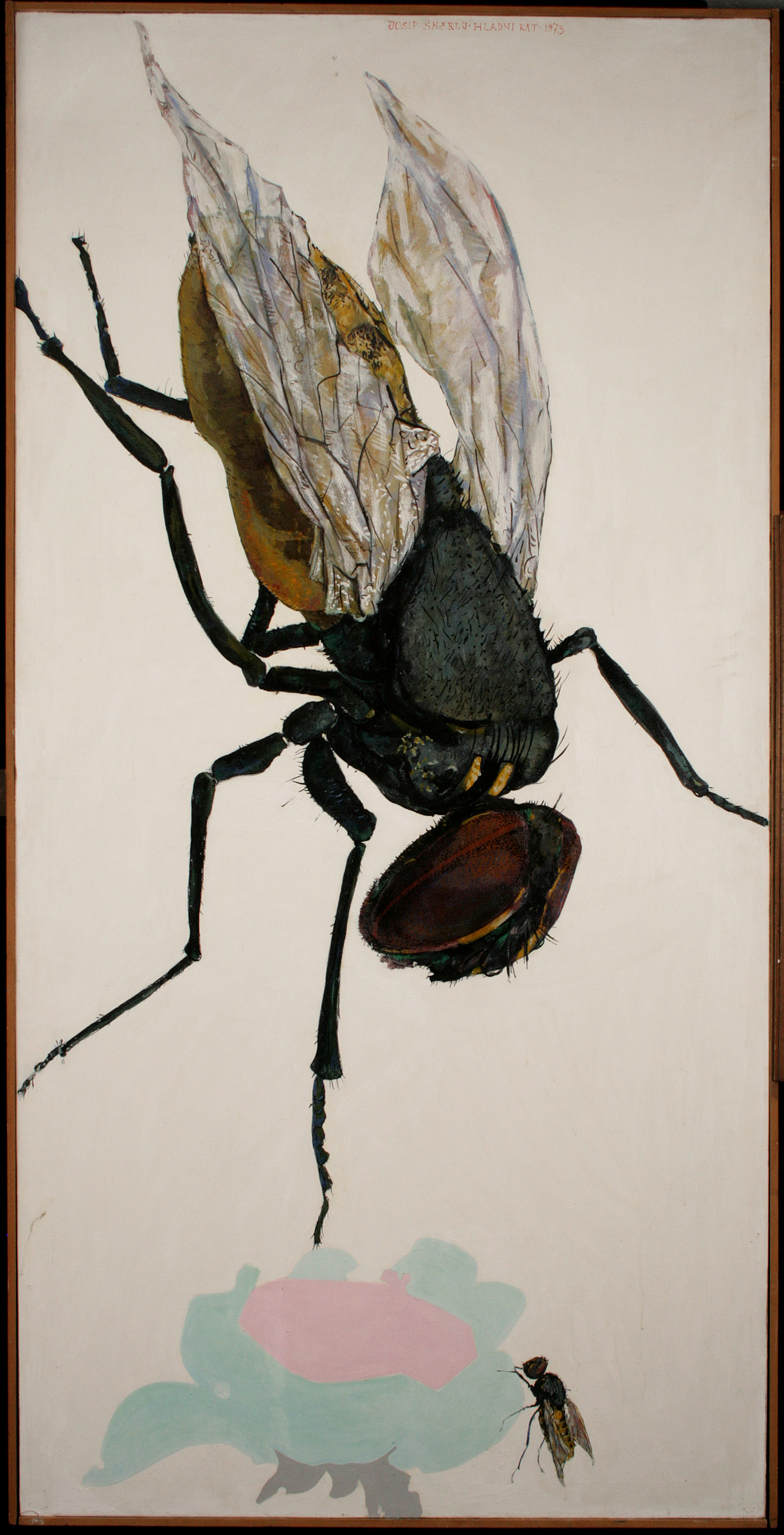
Josip Škerlj Muha, 1973., ulje, platno, UGD-176
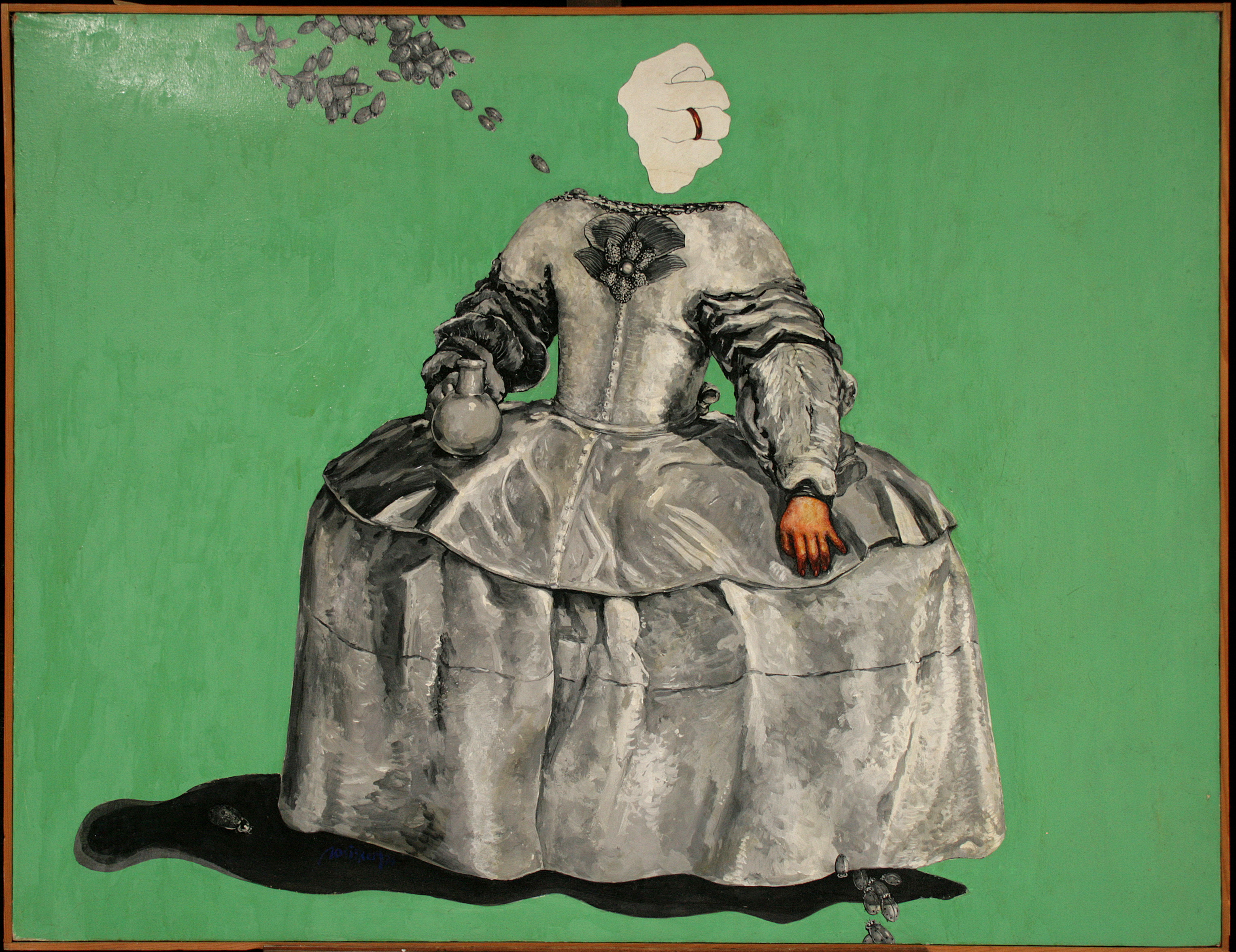
Josip Škerlj Turizam, 1978., ulje, platno, UGD-1239.
TONY CRAGG
SCULPTURE
22.7. - 5.10.2025.
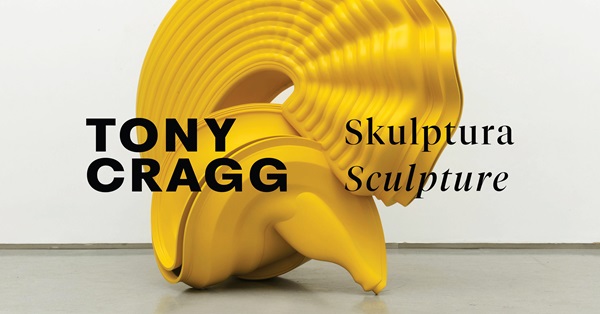
The exhibition curator and project manager are Jelena Tamindžija Donnart, the curator of the Museum of Modern Art Dubrovnik, and the exhibition collaborator is Detmar Westhoff, a German art historian and curator.
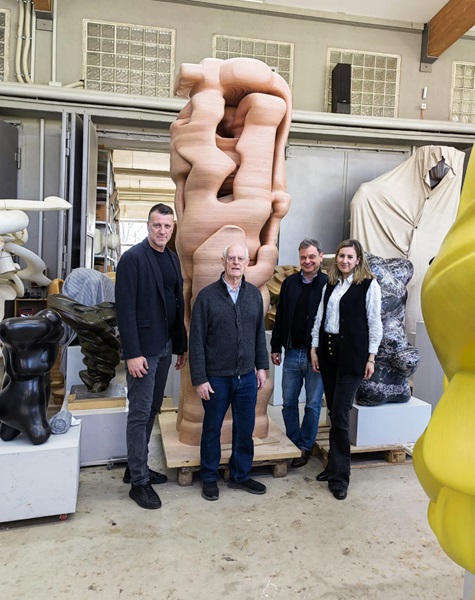
After graduating from the Royal College of Art in London, Tony Cragg's artistic work constantly attempts to find new relationships between people and the material world, not limiting himself to the choice of materials in his creations. He considers sculpture to be a study of how material and forms influence and shape our ideas and feelings.
Tony Cragg represented Great Britain at the 43rd Venice Biennale and held solo exhibitions at the Tate Gallery (London), where he was awarded the renowned Turner Prize, at the Museo Nacional Centro de Arte, Reina Sofia (Madrid), Louvre (Paris), Kunstapalast (Dusseldorf), Istanbul Modern (Istanbul), CAFA Museum (Beijing), Hermitage Museum (St. Petersburg), Nasher Sculpture Center (Dallas, Texas).
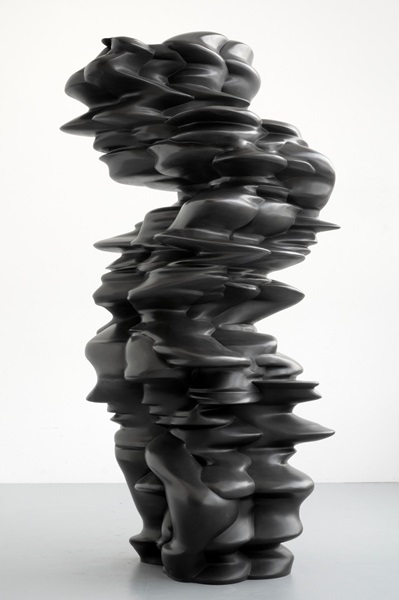
It is, It isn't_#04_242x120x110_bronze_2010_Charles Duprat
At the exhibition at the Museum of Modern Art Dubrovnik, Cragg will present a selection of around 30 sculptures, and his drawings and sketches for sculptures will also be on display. The exhibition, which will encompass the first two floors of the museum and the terraces, will also include an additional exhibition space in the garden area of the Banac Palace. The exhibition is conceived as a kind of retrospective of the author who is presenting himself to the Dubrovnik audience for the first time, and the selection of sculptures will also show his iconic works dating back to his first award-winning exhibition projects from 1985. These unique installations consist of space and floor mosaics that blur the line between natural and artificial landscapes. Of particular note are the cycles entitled "Early Forms", in which he attempts to sculpturally reflect on the transformation of objects that are familiar to us from everyday life and, through their repurposing and change, bring additional social and emotional meanings to them. The sculptures of monumental dimensions are made of bronze, steel, corten steel, wood, fiberglass, and plastic.
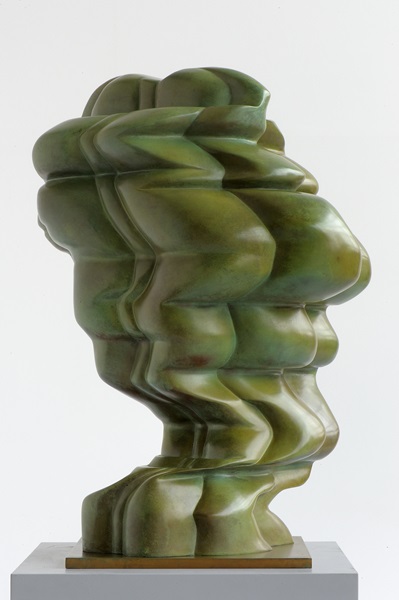
Woman's Head_#05_87x60x50_bronze_2007_Charles Duprat
Tony Cragg has been working and exhibiting since 1969. He studied at the Royal College of Art in London and has lived in Wuppertal since 1977. He has participated in Documenta 7 and 8 and represented Britain at the Biennale in Venice in 1988. He is recipient of the Turner Prize at the Tate Gallery, London in 1988, the prestigious Praemium Imperiale Award, Tokyo in 2007 and the Lifetime Achievement in Contemporary Sculpture Award in 2017.
He held professorships in the Akademie der Künste in Berlin and Kunstakademie Düsseldorf, where he was director from 2009 to 2013. He has exhibited extensively in museums worldwide e.g.: Tate Gallery, London (1988), Stedelijk Van Abbemuseum, Eindhoven and Kunstsammlung Nordrhein-Westfalen, Duesseldorf (1989), Scottish National Gallery of Modern Art, Edinburgh and Musée du Louvre, Paris (2011), Lehmbruck Museum, Duisburg (2013), Von der Heydt-Museum, Wuppertal, Hermitage Museum, St. Petersburg (2016), Boboli Gardens, Florenz (2019), MuBE, Sao Paulo (2019), Houghton Hall, Norfolk (2021), Albertina Wien (2022), Staatliche Graphische Sammlung München (2023), Museu Nacional de Arte Contemporanea, Lissabon (2023), Kunstpalast Düsseldorf (2024), Castle Howard, UK (2024) and Terme di Diocleciano, Rom (2024).
80 YEARS OF THE MUSEUM OF MODERN ART DUBROVNIK
22.5. - 13.7.2025.
The authors of the exhibition were Petra Golušić, museum advisor of the Museum of Modern Art Dubrovnik, Jelena Tamindžija Donnart, curator of the Museum of Modern Art Dubrovnik, and Rozana Vojvoda, museum advisor of the Museum of Modern Art Dubrovnik.
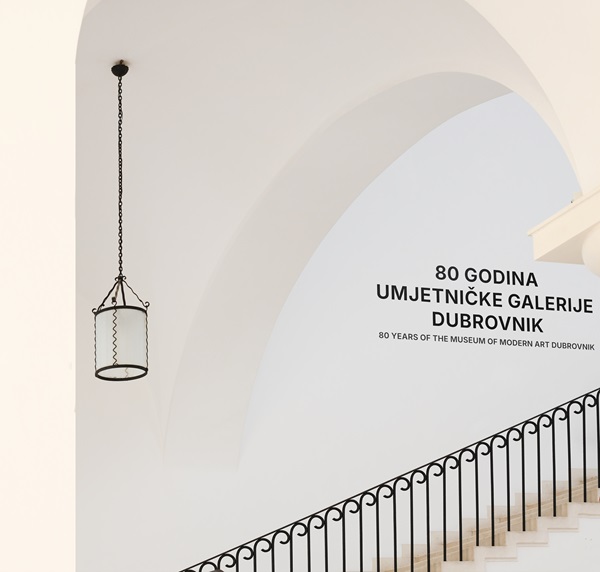
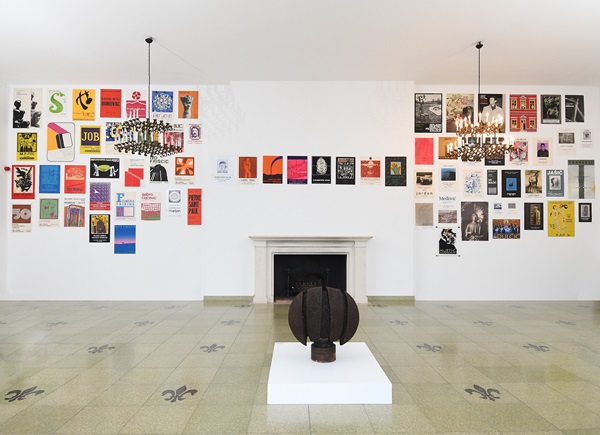
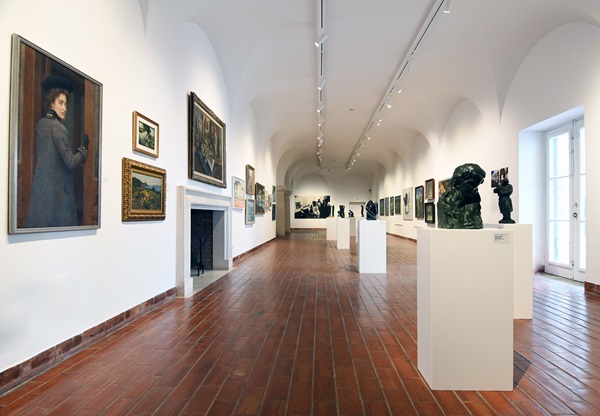
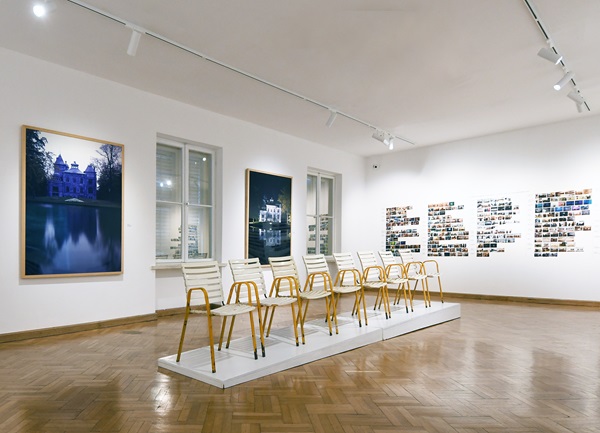
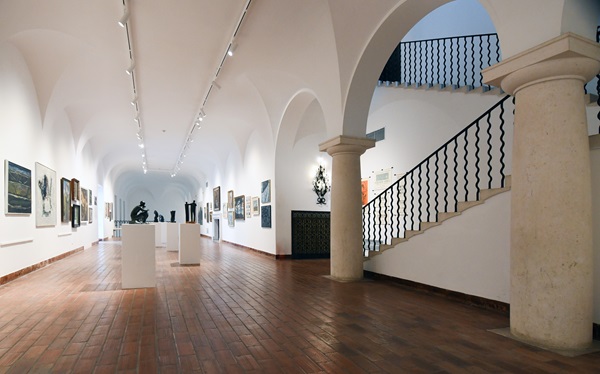
The exhibition 80 Years of the Museum of Modern Art Dubrovnik in the form of a time machine presents the dynamic eighty-year history of the Museum of Modern Art Dubrovnik, which has become a vibrant place of interaction between art and the public through numerous exhibitions, art workshops, expert tours and lectures. The Museum of Modern Art Dubrovnik was initially located in the Crijević Pucić summer house, and from 1948 to the present day it has been located in the Banac villa in Ploče, a building designed by Lavoslav Horvat and Harold Bilinić from 1937 to 1939 and which represents an exceptional achievement of interwar Croatian architecture. The materials that were displayed contain extensive photo documentation of contemporary and modern art exhibitions, international exhibitions, lectures, events, art workshops, and promotions, from archival to recent photographs. Numerous archival posters and catalogues are presented, as well as works from the Collection of Modern and Contemporary Art in a chronological order from its foundation to the present day. The collection of the Museum of Modern Art Dubrovnik provides a very clear insight into the time period from the beginning of modern art in Croatia, at the turn of the nineteenth and twentieth centuries, through the various stylistic trends of the twentieth century to contemporary tendencies in art on the Dubrovnik and Croatian scene.
As part of the exhibition 80 years of the Museum of Modern Art Dubrovnik, a virtual exhibition Outside the Frames was installed, authored by Ivona Šimunović, and produced and technically supported by Pixel design and Loop production. The exhibition creates new multimedia audio-visual experiences and sensations through new presentation flows that incorporate existing museum content. As such, it will further emphasize emotions and reactions and establish new communication processes. It is precisely thanks to these new ways of presentation that the museum object comes to the center of the story, even more emphasized and intense, almost like the main character of a film, which thoughtfully and selectively conquers its audience, a generation marked by a new and dynamic time of constant change and development.
.jpg)
VANIŠTA
RETROSPECTIVE
Author of the exhibition: Zdenko Tonković
Curator and exhibition layout: Ivona Šimunović
21.3. - 11.5.2025.
.jpg)
.jpg)
.jpg)
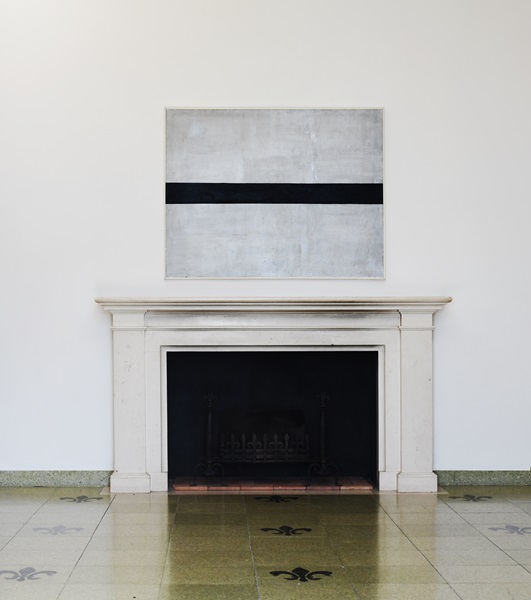
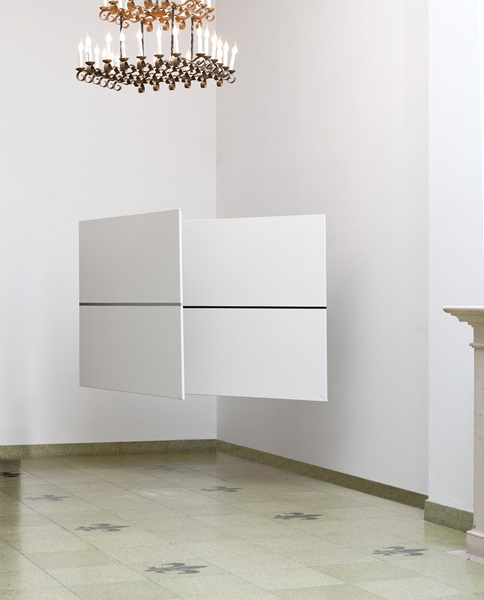
The retrospective exhibition of one of the most important Croatian artists, Josip Vaništa, entitled VANIŠTA, is also the first exhibition of the Museum of Modern Art Dubrovnik in the anniversary exhibition program of the 80th anniversary of its founding.
The author of the exhibition is art historian Zdenko Tonković, who wrote three monographs about Josip Vaništa (Vaništa's own publishing house in 1983, Naprijed in 1993, Kratis in 2004), participated in the preparation of Vaništa's book of drawings (Liber University Publishing House, 1979; the first Vaništa book), wrote numerous forewords and articles about Vaništa's work, and ultimately became close friends with the author over a long period of time. The curator of the exhibition is Ivona Šimunović, who is also the author of the exhibition's layout.
This major retrospective exhibition at the Dubrovnik Art Gallery is the first solo presentation of this important artist in Dubrovnik. The exhibition presents the artist's entire life's work, and almost 180 works are on display, and in addition to works from the holdings of the Dubrovnik Art Gallery, works were loaned from the National Museum of Modern Art, the Museum of Contemporary Art Zagreb, the Art Gallery Split, the Karlovac City Museum, the Museum of Fine Arts Osijek, the City Museum of Rovinj, the Art Gallery Slavonski Brod, the National and University Library Zagreb, the Faculty of Mining, Geology and Petroleum in Zagreb, the Josip Vaništa Foundation, the Vugrinec Varaždin Collection, the Anišić Collection, the Krajačić Collection, and numerous private lenders. The exhibition also presents original archival documentation from the Gorgona period that has never been exhibited before.
Josip Vaništa (1924–2018) is one of the most significant Croatian artists: a painter, an artist of new practices, a writer, and a pedagogue. The significance of Vanište for Croatian art is also evidenced by the fact that since the beginning of March his work has been on display in the permanent exhibition of one of the world's most important museums, MoMA in New York, as part of an exhibition dedicated to the Zagreb art scene of the 1960s in collaboration with MoMA and the Zagreb Academy of Fine Arts, which will last for three years.
This major retrospective exhibition at the Dubrovnik Art Gallery is the first solo presentation of this important artist in Dubrovnik. The exhibition presents the artist's entire life's work, and almost 180 works are on display, and in addition to works from the holdings of the Dubrovnik Art Gallery, works were loaned from the National Museum of Modern Art, the Museum of Contemporary Art Zagreb, the Art Gallery Split, the Karlovac City Museum, the Museum of Fine Arts Osijek, the City Museum of Rovinj, the Art Gallery Slavonski Brod, the National and University Library Zagreb, the Faculty of Mining, Geology and Petroleum in Zagreb, the Josip Vaništa Foundation, the Vugrinec Varaždin Collection, the Anišić Collection, the Krajačić Collection, and numerous private lenders. The exhibition also presents original archival documentation from the Gorgona period that has never been exhibited before.
Josip Vaništa (1924–2018) is one of the most significant Croatian artists: a painter, an artist of new practices, a writer, and a pedagogue. The significance of Vanište for Croatian art is also evidenced by the fact that since the beginning of March his work has been on display in the permanent exhibition of one of the world's most important museums, MoMA in New York, as part of an exhibition dedicated to the Zagreb art scene of the 1960s in collaboration with MoMA and the Zagreb Academy of Fine Arts, which will last for three years.
At Museum of Modern Art Dubrovnik, this significant retrospective exhibition is the first sole presentation of this important artist in Dubrovnik. The artist's entire life's work is showcased in the exhibition, with almost 180 works on display. In addition to works from the holdings of the Museum of Modern Art Dubrovnik, works were loaned from the National Museum of Modern Art, the Museum of Contemporary Art Zagreb, the Art Gallery Split, the Karlovac City Museum, the Museum of Fine Arts Osijek, the City Museum of Rovinj, the Art Gallery Slavonski Brod, the National and University Library Zagreb, the Faculty of Mining, Geology and Petroleum in Zagreb, the Josip Vaništa Foundation, the Vugrinec Varaždin Collection, the Anišić Collection, the Krajačić Collection, and numerous private lenders. The exhibition also presents original archival documentation from the Gorgona period that has never been exhibited before.
Josip Vaništa (1924–2018) is one of the most significant Croatian artists. He is a painter, an artist of new practices, a writer, and a pedagogue. The significance of Vaništa for Croatian art is also evidenced by the fact that since the beginning of March his work has been on display in the permanent exhibition of one of the world's most important museums, MoMA in New York, as part of an exhibition dedicated to the Zagreb art scene of the 1960s in collaboration with MoMA and the Zagreb Academy of Fine Arts, which will last for three years.
Short biography:
Josip Vaništa was born on May 17, 1924, in Karlovac, where he graduated in 1943. He graduated from the
Academy of Fine Arts in Zagreb in 1948, at the Teaching Department, and continued his specialization in painting for a year in the class of Marino Tartaglia. He was employed as an assistant in the Drawing Department at the then Faculty of Technology and Architecture of the University of Zagreb in 1951. He was appointed assistant professor in 1964, associate professor in 1970, and full professor in 1980. He retired in 1994. He was elected an associate member of the Department of Fine Arts of the Croatian Academy of Sciences and Arts in 1992, and a full member two years later. He had his first exhibition in 1952 with Miljenko Stančić at the Museum of Arts and Crafts. He is the recipient of numerous awards and recognitions, and in 2006 he received the Vladimir Nazor Award for Lifetime Achievement. He died in Zagreb on March 24, 2018.
Artists on Artists – A Visual Panopticon
organised by the Museum of Modern Art in Dubrovnik and the National Museum of Modern Art from Zagreb
Curator: Lada Bošnjak Velagić
19.12.2024. - 9.3.2025.
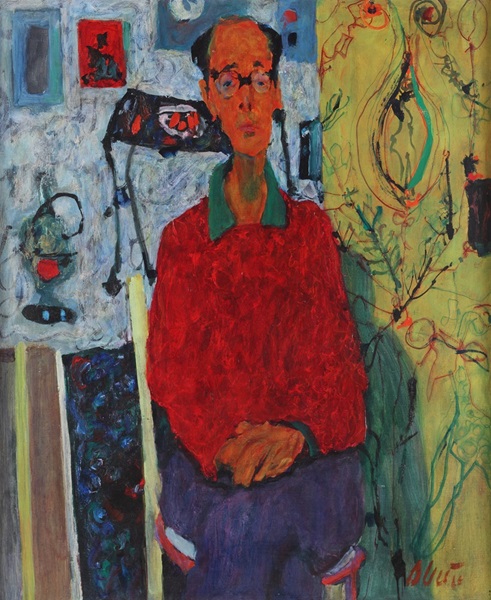
Ivo Dulčić, Portrait of Antun Masle, 1965, NMMU Collection
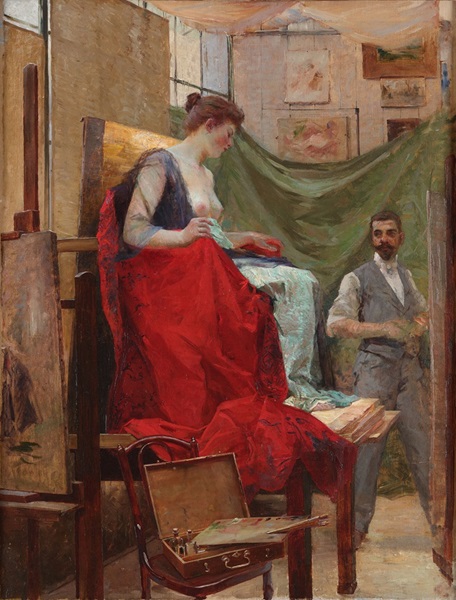
Vlaho Bukovac, Portrait of Bela Čikoš in the Studio, 1896, Vugrinec Collection
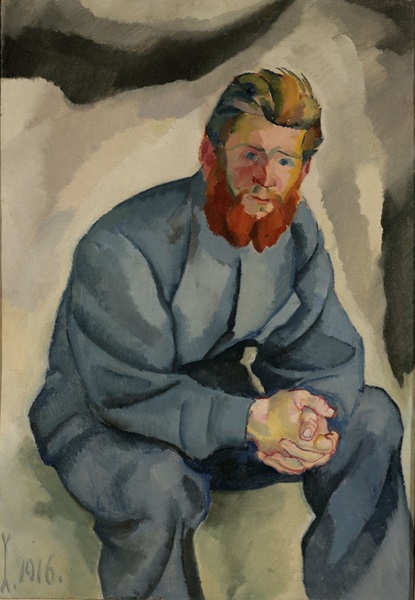
Zlatko Šulentić, Man with a Red Beard, 1916, NMMU Collection
The exhibition showcases approximately eighty portraits in which artists depict their peers in the mediums of painting, sculpture, graphic art, and photography. It highlights the complexity of the relationship between the portraitist and the subject, as well as the interplay between artists and the wider cultural and social milieu. Curated by Lada Bošnjak Velagić, a museum advisor at the National Museum of Modern Art in Zagreb, the selection of major works is based on the NMMU collection, with several pieces loaned from private collections. This exhibition was initially presented at the National Museum of Modern Art in 2022, and it will be further enriched at the Museum of Modern Art in Dubrovnik with works from MoMAD’s own collection, selected by museum advisor Rozana Vojvoda.
The exhibition explores the complexity of relationships among artists within a broader cultural and social framework, “portraying” our art scene from the late 19th century to the present day. It presents visitors with the personal, collaborative, mentoring, patronage, and other connections that have defined key figures in our visual arts during this period. For instance, the mutual portraits of Vlaho Bukovac and Bela Čikoš Sesija, as well as Bukovac’s portrait of Mirko Rački, explore the mentoring, friendship, and collegial bonds between these artists, alongside the influence of Izidor Kršnjav, the division within the Society of Arts, and the emergence of Croatian modern art in 1898.
The exhibition features a range of artists both as portraitists and subjects (Stanoje Jovanović as Šulentić’s “Man with a Red Beard”, Ivo Dulčić, Marta Ehrlich, Ksenija Kantoci, Krsto Hegedušić, Nino Vranić…), with particularly engaging combinations of self-portraits alongside portraits of fellow artists, such as Milivoj Uzelac with Vilko Gecan or Matko Trebotić with Joseph Beuys. A more personal section of the exhibition presents numerous portraits dedicated to married couples (e.g., Ruža Klein and Ivan Meštrović, Nasta Rojc and Branko Šenoa, Marta Ehrlich and Kamilo Tompa, Mila Kumbatović and Oton Gliha, Lujza Kuzmić and Karlo Mijić, Vesna Sokolić and Milan Berbuč).